


Back to All Articles
30 Real Startup Pitch Deck Examples and What Founders Can Learn
Explore 30 real startup pitch deck examples with funding context, original source links, standout choices, and practical takeaways for building an investor-ready deck.
Author: Tanya Slyvkin, CEO & Founder, Whitepage Studio

TL;DR
- Study the reasoning first, then rebuild the slides around your own business and evidence. Airbnb clarifies marketplace value, Front connects growth to capital efficiency, and LinkedIn separates demonstrated progress from future plans.
- Match the example to your stage and business model. An early product pitch and a growth-stage investor deck rely on different forms of evidence.
- Historical figures explain the conditions in which each deck was created. Current benchmarks should come from current market data, and public decks may omit confidential information.
- A strong pitch deck supports an investment decision. Funding still depends on investor fit, diligence, terms, timing, and business performance.
The most useful pitch deck examples show how founders make unfamiliar businesses easier to understand. Airbnb explains a marketplace, Front connects traction with capital efficiency, and WeWork shows how a compelling expansion story can coexist with unresolved business-model risk.
The profiles below examine how each deck frames the company, what makes the argument persuasive, and which choices founders can adapt for a similar stage or business model. Most are fundraising decks; Zuora’s sales narrative and Wayfair’s public-company presentation are labeled exceptions. Moz illustrates a round that did not close.
This is the same lens we use in client work at Whitepage. Across 12 years and more than 4,000 delivered projects, we focus on how the business story, available evidence, and slide design work together. The public decks below are examples we analyze independently; Whitepage did not create them.
How to Read This Selection of Pitch Deck Examples
This collection covers different industries, stages, and presentation types. We compare useful communication choices across the examples while keeping company valuation and fundraising outcomes in their original context.
The funding amount shown for each company is tied to the round associated with the deck. It does not represent lifetime funding. “Not verified” means the available public sources do not confirm the date, stage, or closed amount for that specific presentation. Slide counts refer to the linked version.
Investor expectations change with the round. Review what belongs in a pre-seed pitch deck, seed-round pitch deck, and Series A pitch deck before comparing examples across stages.
Founder publications and company announcements establish context; archives help locate slides. An original pitch deck may survive only as a public copy, while a redesigned template changes its presentation. We label exceptions and treat the recommendations below as editorial analysis.
A missing slide in a public copy does not prove investors lacked that information. Financials or other sensitive material may have been shared separately.
30 Real Pitch Deck Examples and Why Their Stories Worked
For an early product story, start with Intercom; for SaaS growth, Front; for a marketplace, Airbnb. Then compare examples from other sectors to see how they answer similar investor questions. Each profile explains why the story worked and what founders can adapt at a comparable stage.
1. Airbnb Pitch Deck
Airbnb makes a two-sided marketplace easy to understand by giving hosts and travelers distinct reasons to participate.
.avif)
Why it worked: The problem and solution slides mirror each other: expensive accommodation meets lower-cost stays, while unused space becomes income for hosts. The product flow then shows how those benefits lead to a booking, making both sides of the marketplace understandable before the deck discusses scale.
Key lesson for founders: At an early stage, use the strongest evidence the company can realistically have. That may include customer interviews, waitlist growth, host sign-ups, pilot demand, or early marketplace activity. Explain what each signal demonstrates and which assumptions still need to be tested.
2. Pepper Bio Pitch Deck
Pepper Bio gives investors a reason to care about the science before asking them to understand the platform.

Why it worked: A personal story about Alzheimer’s makes the treatment problem tangible. The deck then explains the limits of existing drug-discovery methods and positions the platform as a systematic way to study biological systems.
Key lesson for founders: Separate demonstrated capabilities from planned outcomes. Depending on the company’s stage, credible evidence may include laboratory results, expert validation, patents, grants, research partnerships, or a specific validation roadmap. State what is proven, what comes next, and how each milestone changes technical or commercial risk.
3. WeWork Pitch Deck
WeWork shows how a persuasive expansion story can still leave the underlying business risks unresolved.
.avif)
Why the narrative was persuasive: Membership growth, location expansion, and workplace imagery supported a recognizable proposition: flexible space with a sense of community. The combination made the expansion story easy to picture, even though the later business outcome did not validate the model.
Key lesson for founders: A capital-intensive growth story should make lease commitments, occupancy sensitivity, location economics, cash requirements, and downside scenarios visible. WeWork entered Chapter 11 in 2023 and emerged in 2024, so this deck is most useful as a study of persuasive storytelling and unresolved operating risk.
4. Metafuels Pitch Deck
Metafuels leads with the scale of an industry problem, then asks whether its technology can meet that demand.

Why it worked: The market-first opening connects the company to aviation’s need for lower-emission fuel, while the roadmap turns a technical opportunity into a sequence of milestones. Investors can see how the company intends to move from development toward commercial use.
Key lesson for founders: Distinguish laboratory results, pilot performance, and commercial-scale targets. Show the assumptions behind feedstock, energy costs, customer demand, and production capacity. If commercial evidence is not yet available, name the next validation milestone and the evidence it should produce. Whitepage’s industry analysis services can help assess the demand side of that case.
5. YouTube Pitch Deck
YouTube’s early pitch turns online video into a practical user problem that investors can grasp before the technology.
.avif)
Why it worked: The presentation frames online video as a practical problem of uploading, sharing, and watching, then introduces a simpler experience. The product has a clear purpose before the deck asks the audience to consider the underlying technology.
Key lesson for founders: Show the valuable change in user behavior first. Then explain distribution, content rights, infrastructure costs, and monetization. Early-stage evidence might be upload activity, viewing patterns, or repeat use; later rounds require a clearer connection between usage and sustainable economics.
6. Stytch Pitch Deck
Stytch turns authentication from a technical feature into a business issue: users struggle to get in, and developers spend time maintaining access.
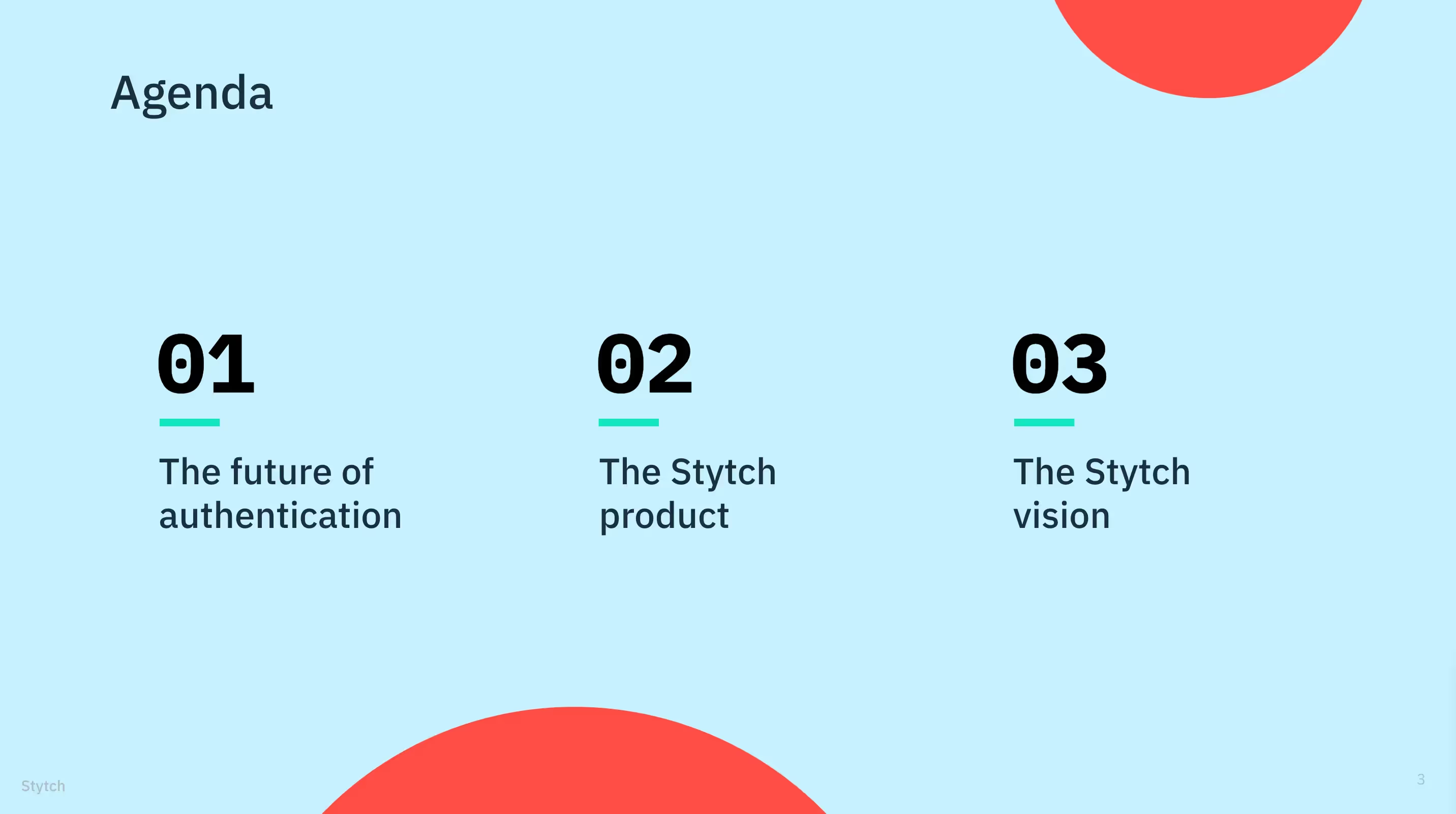
Why it worked: The pitch connects authentication infrastructure to the experience of using an application. Product examples help a nontechnical reader understand the difference between a login screen and the systems behind it.
Key lesson for founders: Explain the commercial consequence of the technical problem, then show adoption evidence appropriate to the round. At Series B, product examples should sit alongside revenue, retention, customer expansion, or other proof of commercial use. Confidential customer detail can move to a controlled investor appendix.
7. Zuora Pitch Deck
Zuora demonstrates how a market shift can make a product relevant before the presentation introduces its features.
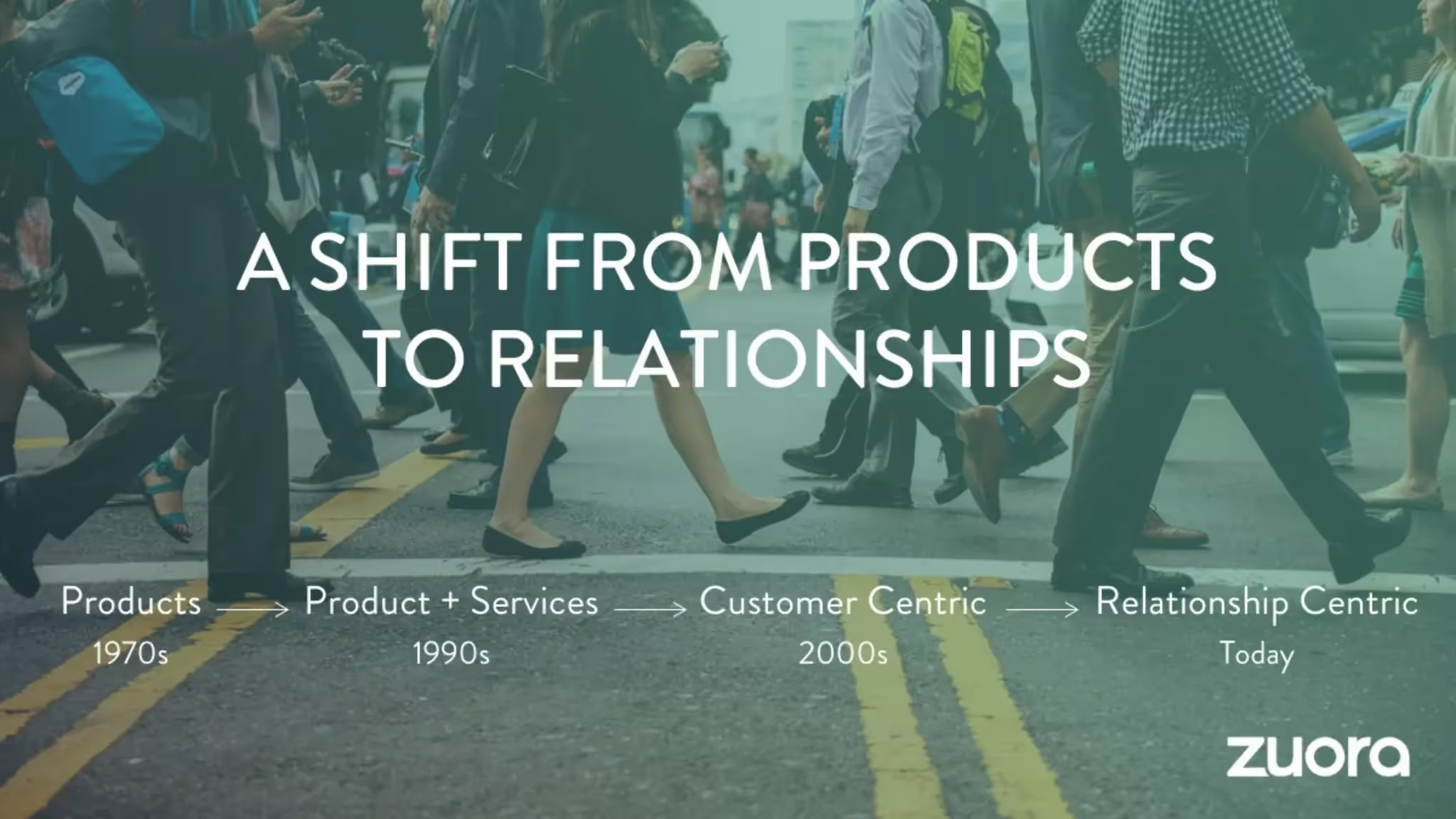
Why it worked: The subscription-economy narrative starts with a change in how companies sell and customers buy. That market shift creates a reason to reconsider existing billing systems before the presentation introduces product capabilities.
Key lesson for founders: Adapt the narrative to the decision in front of the audience. A buyer needs to understand implementation and business value; an investor needs the business model, growth logic, and funding plan. This audience-first distinction also guides our sales presentation services.
8. Point.me Pitch Deck
Point.me makes a complicated rewards-booking process understandable by showing what travelers have to work through without the product.
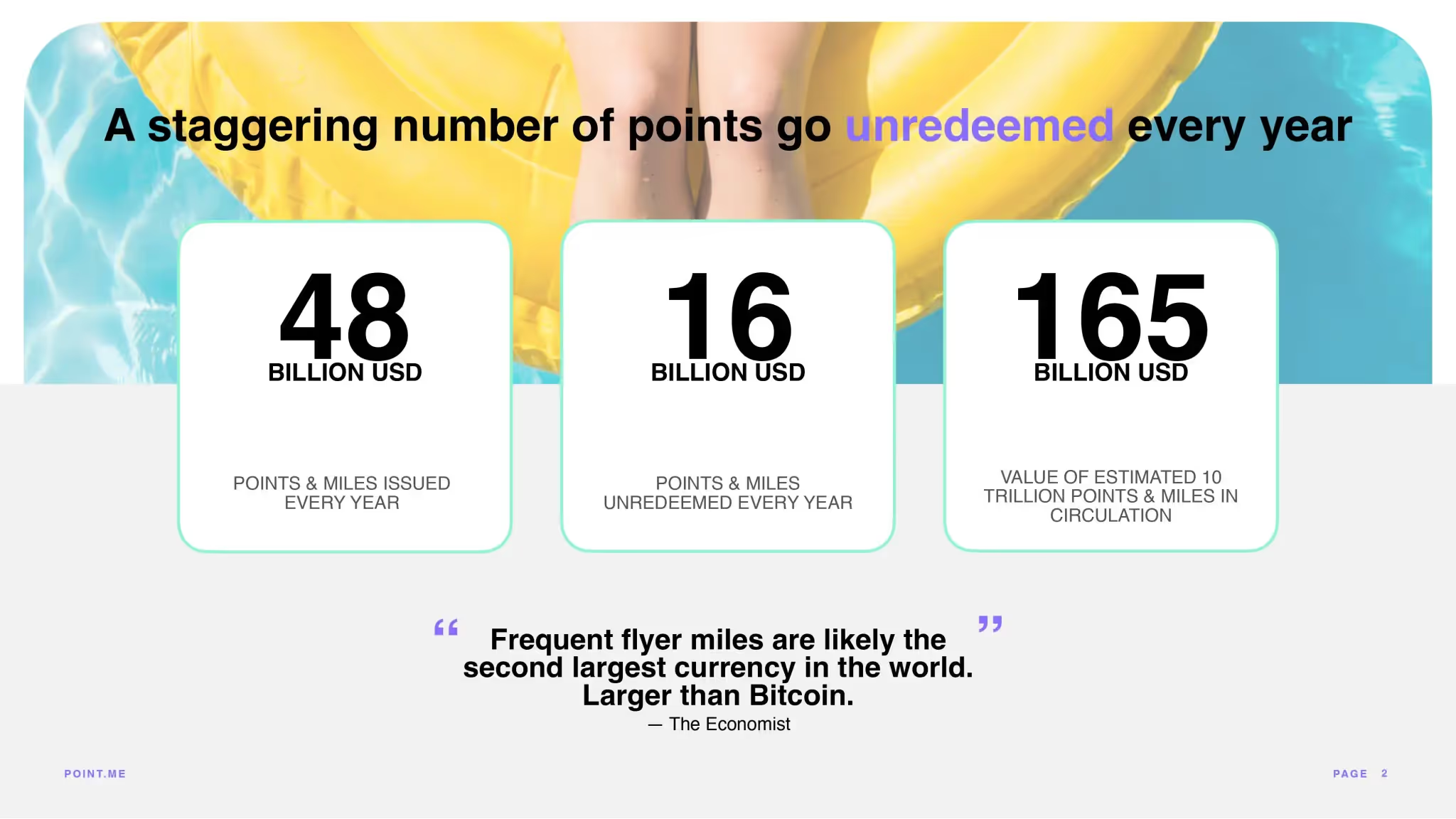
Why it worked: The story moves from the difficulty of using rewards to the proposed search experience, supported by product screens and traction. The sequence gives investors evidence of both customer friction and a usable solution.
Key lesson for founders: Show the current workaround, the better experience, and a measurable result. When repeat-booking data is still limited, successful searches, pilot bookings, partner access, or customer interviews can provide stage-appropriate proof. Also explain any dependence on airline or loyalty-program data.
9. Dropbox Pitch Deck
Dropbox makes its product valuable by contrasting a familiar, awkward workflow with a simpler one.
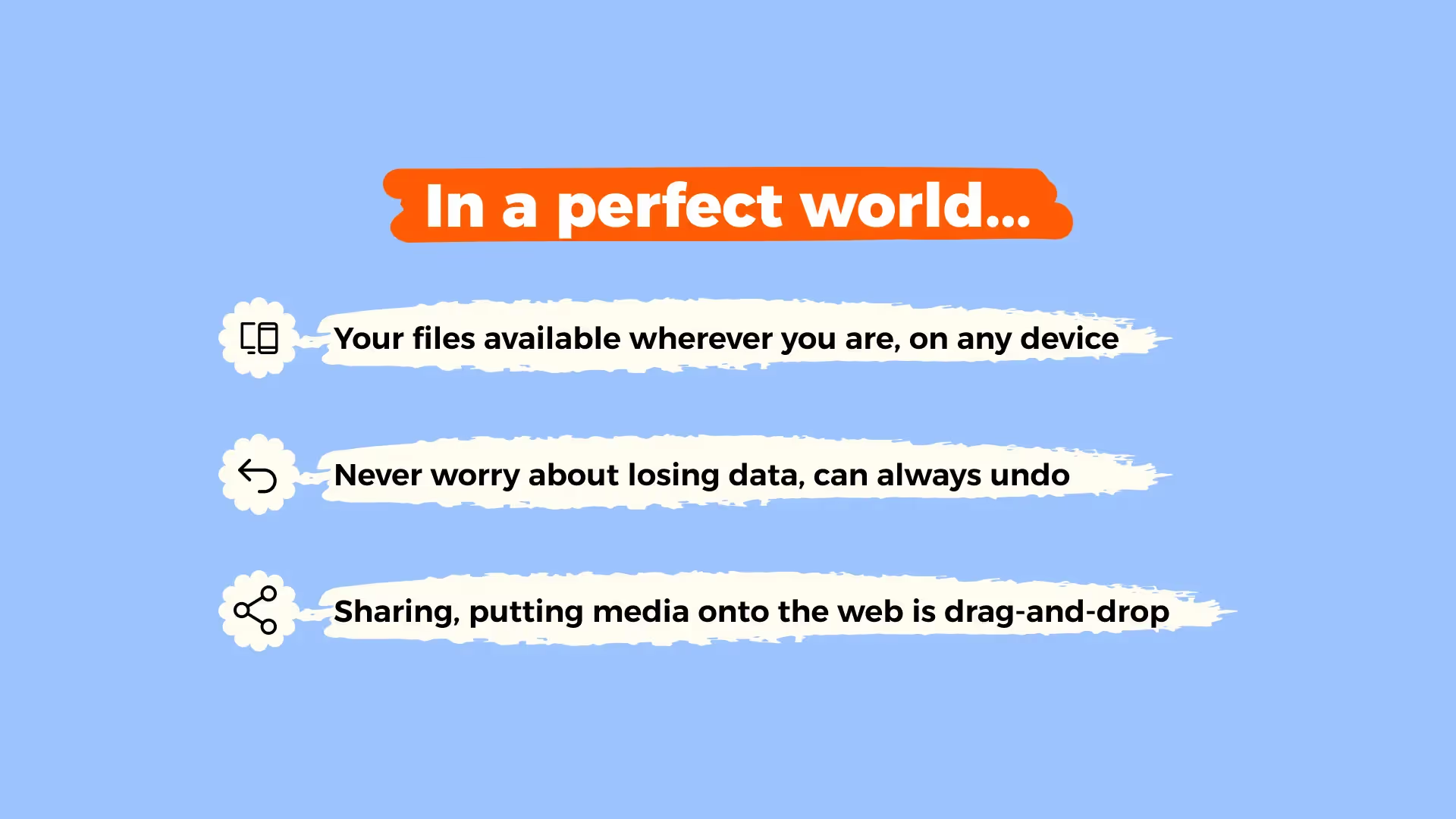
Why it worked: Email attachments, USB drives, and scattered files establish a familiar problem. The presentation then describes the experience users want and lets the product demonstration resolve the friction introduced at the start.
Key lesson for founders: Let the demonstration resolve the opening problem. As evidence grows, add cohort retention, paid conversion, and the cost of delivering the service at scale. At an earlier stage, repeat usage and sharing behavior can show whether the first useful experience is becoming a habit.
10. Front Pitch Deck
Front makes revenue growth more meaningful by showing how efficiently the company reached it.

Why it worked: The founder’s account puts recurring revenue, customer expansion, and spending discipline in the same growth story. Together, those measures help investors judge both momentum and the resources required to sustain it.
Key lesson for founders: Pair traction with an explanation of how it can continue. Connect acquisition channels to the forecast and expose the assumptions that drive growth. Financial projections should show conversion, retention, hiring, spending sensitivities, and the range of possible outcomes behind the revenue line.
11. Copper Cow Coffee Pitch Deck
Copper Cow Coffee connects a founder’s personal relationship with the product to evidence of a commercial business.

Why it worked: The family story and product photography establish the brand, while distribution and sales add commercial proof. The deck reports placement in more than 2,000 stores and $80,000 in monthly revenue for June 2018. These are historical claims from the deck, and together they make the brand story measurable.
Key lesson for founders: Pair brand storytelling with the strongest commercial evidence available at the stage. Early proof might include retailer reorders, test-store sales, customer interviews, or repeat-purchase intent. As the company grows, separate wholesale orders from consumer sell-through and show margin by channel.
12. Contentools Pitch Deck
Contentools is useful for studying how a multi-feature platform can be presented as one connected way of working.

Why it worked: Planning, collaboration, publishing, and analysis form one continuous workflow. Showing a piece of work move through the product helps the reader see where separate tools and handoffs become unnecessary.
Key lesson for founders: Explain one customer job from start to finish, then attach a measurable benefit. An early team can use pilot time saved, user feedback, or a clearly defined test. Later-stage evidence should identify the buyer, baseline process, measurement period, and resulting business value.
13. MapMe Pitch Deck
MapMe uses an existing community map to show how a single application could become a repeatable product.
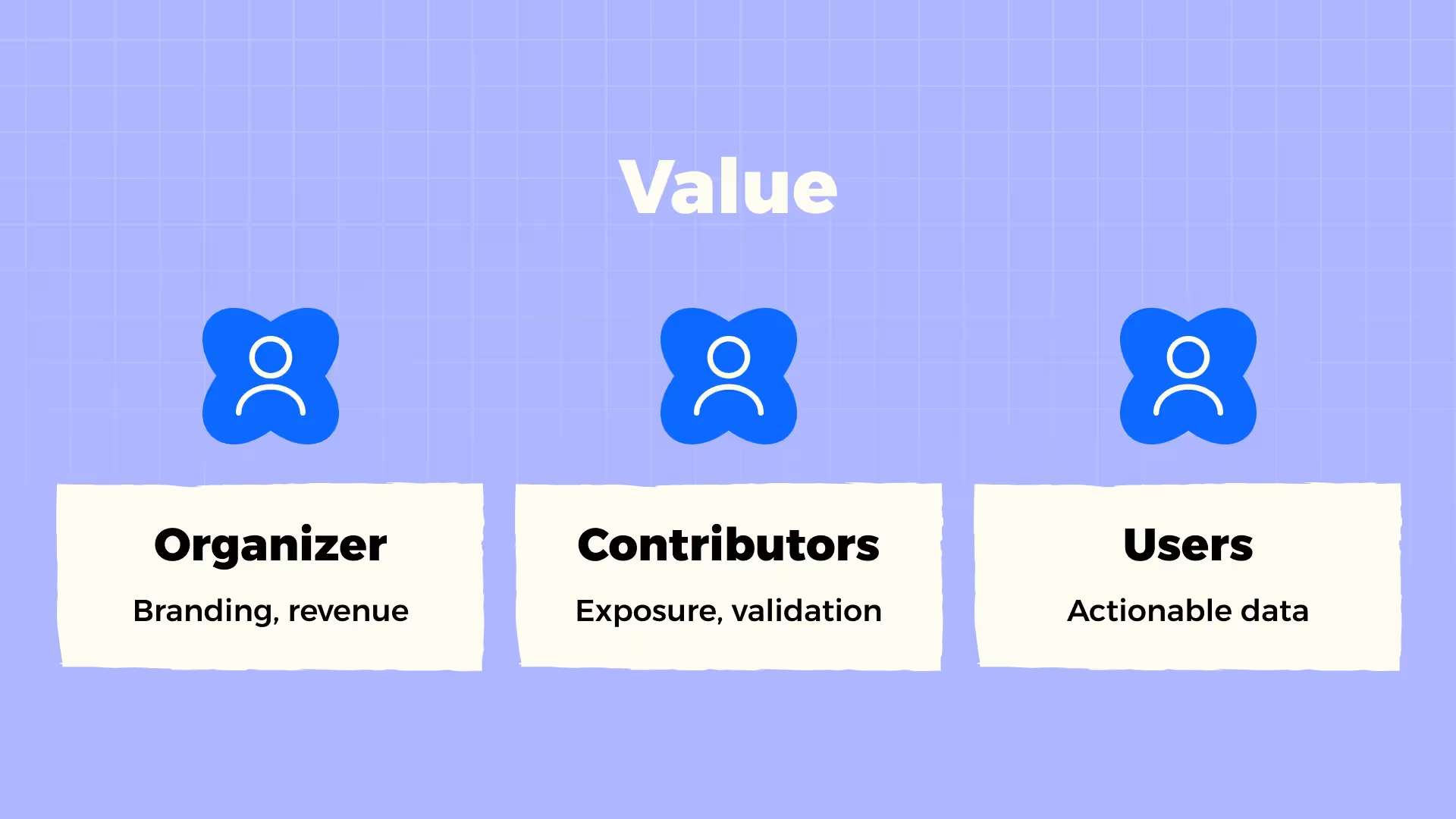
Why it worked: The presentation starts with a concrete community map, then expands to organizers, contributors, and users. That progression makes the platform opportunity easier to evaluate because each participant has a visible role.
Key lesson for founders: Identify the buyer, the participants who create value, and the path to reaching similar buyers repeatedly. One successful use case becomes more persuasive when the acquisition logic is clear. Whitepage’s Go-To-Market strategy services address this audience-and-channel question.
14. TransferWise Pitch Deck
TransferWise explains a different payment mechanism through a benefit the customer already understands: the cost of sending money.
.avif)
Why it worked: The deck simplifies the transfer problem and groups competing approaches into clear categories. Investors can compare how the market works without decoding a crowded collection of logos.
Key lesson for founders: Keep the explanation simple while making the economics visible. At an early stage, corridor-specific price comparisons, transaction tests, and repeat intent can support the case. As volume grows, show revenue, transfer costs, customer acquisition, repeat use, and how unit economics change with scale.
15. Crema.co Pitch Deck
Crema.co frames discovery and personalization as the start of a recurring-purchase relationship.

Why it worked: The presentation connects craft roasters, customer preferences, and subscriptions. The founder’s upload reports 28% month-over-month growth and more than 50 coffees from 15 roasters. These historical figures make the proposition concrete, although the growth period still matters when interpreting them.
Key lesson for founders: Explain why the next purchase will happen. An early subscription business can use first reorders, customer interviews, or engagement with preference features. As data matures, show retention, contribution margin after fulfillment, and evidence that the supplier network can scale.
16. Chewse Pitch Deck
Chewse uses a few operating figures to make its office-catering business easy to follow during a live pitch.

Why it worked: Customer context, meals served, and revenue growth give the visuals substance. The deck’s short statements suit a live pitch because the audience can absorb them while listening.
Key lesson for founders: Choose a small set of metrics and define what each one measures. A live deck can rely on the speaker for context; an emailed version should explain order value, company revenue, delivery costs, customer concentration, and recurring contracts clearly enough to stand alone.
17. Coinbase Pitch Deck
Coinbase shows how to explain an unfamiliar market while keeping the company’s own progress distinct from category-wide activity.
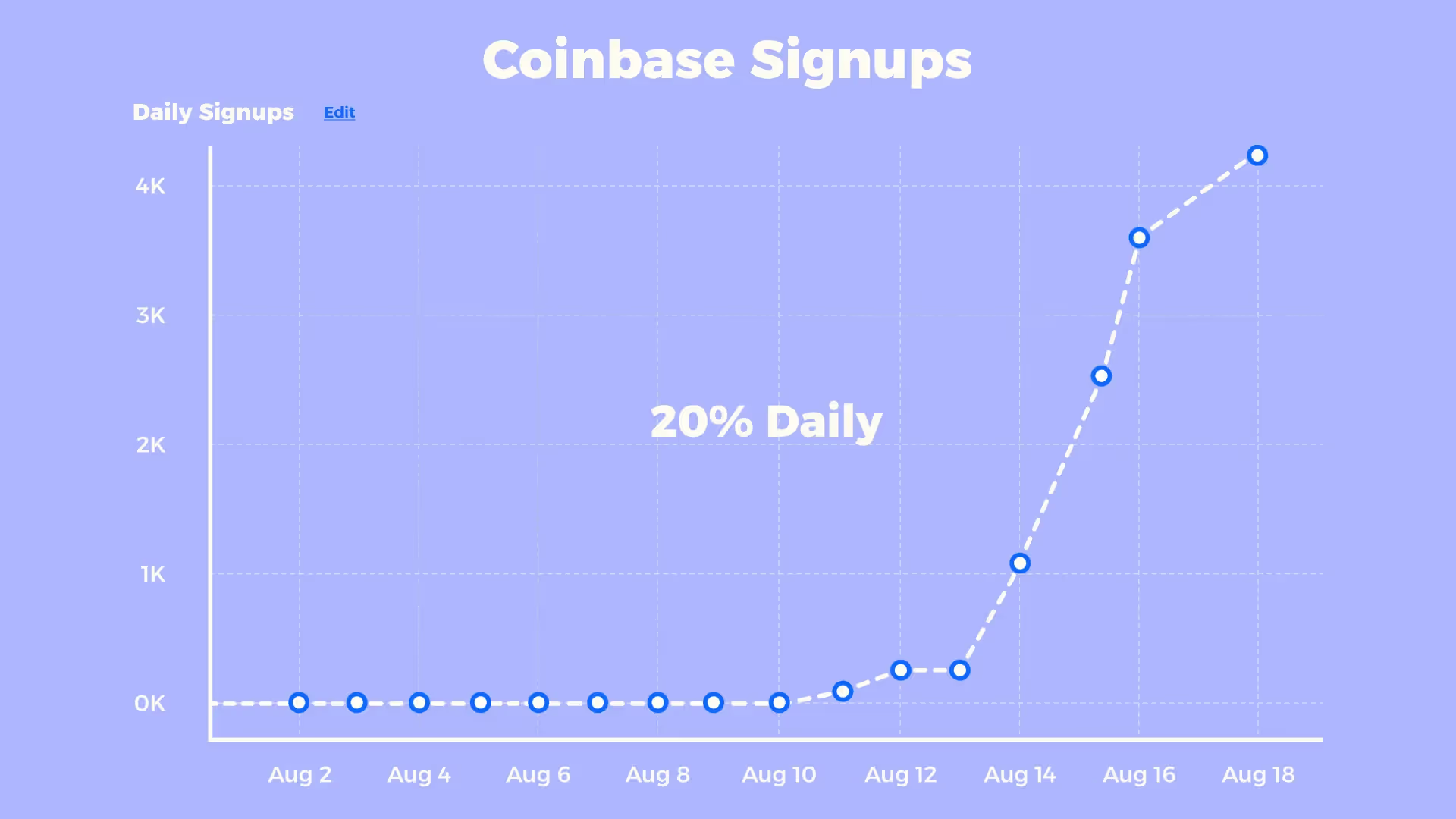
Why it worked: The pitch explains Bitcoin before introducing the business built around it. Adam Draper’s retrospective adds essential context: the deck’s $2 million daily volume described the Bitcoin market, while Coinbase still needed company-level evidence.
Key lesson for founders: Present market momentum and company traction as separate layers of evidence. Label every metric’s scope and period, then address custody, security, usage, and relevant operating constraints. At an early stage, product adoption or customer behavior can support the company case before mature revenue metrics exist.
18. Wayfair Pitch Deck
Wayfair shows how an established retailer connects customer demand to the operations needed to serve it.
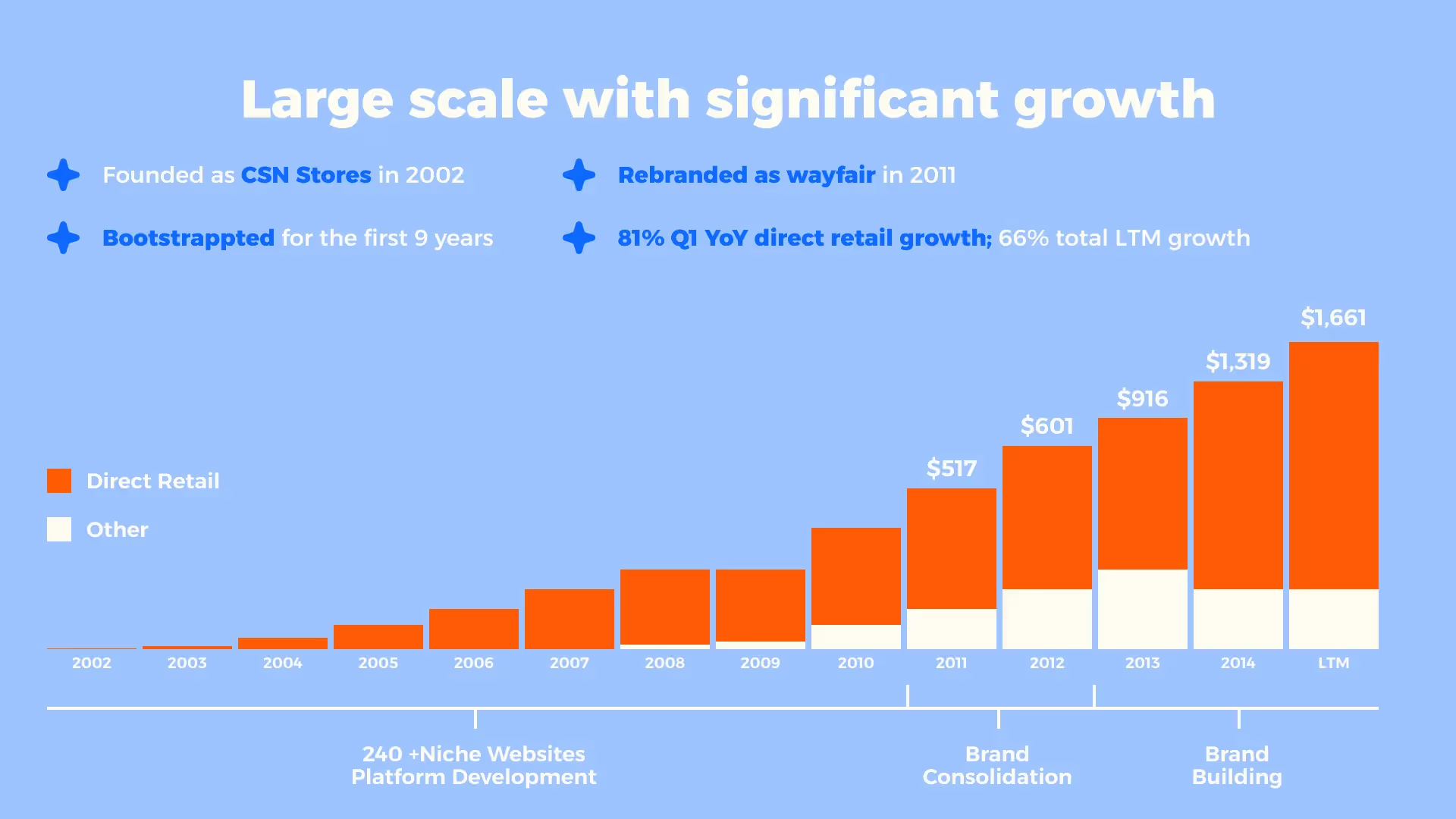
Why it worked: Slide 17 puts active customers, repeat orders, revenue, and advertising spend together. Repeat orders rise from 52% to 57% of orders between Q2 2014 and Q2 2015. The combined view makes the growth argument concrete and shows how customer behavior supports revenue.
Key lesson for founders: Match the evidence to the company’s stage. A later-stage deck should connect repeat purchasing, revenue, acquisition costs, fulfillment costs, and margin. Earlier startups can use initial repeat behavior or cohort learning, provided the deck states how the measure was defined.
19. Vori Pitch Deck
Vori brings investors into the working day of a grocer before asking them to value a software platform.
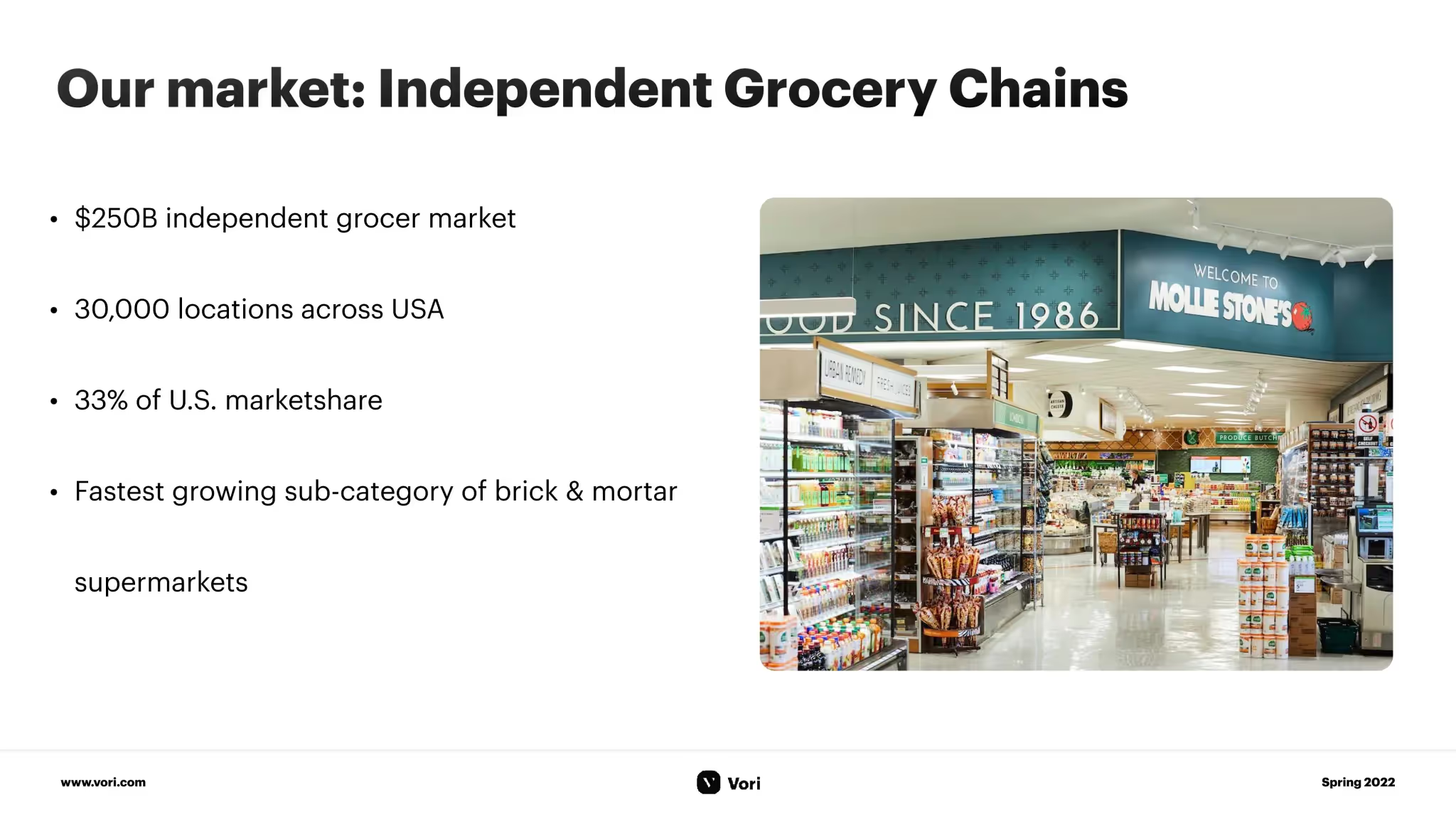
Why it worked: Inventory and ordering problems place the product inside a grocer’s working day. The deck then connects fragmented processes to the opportunity for a shared system, making the operational need tangible.
Key lesson for founders: Make the workflow concrete, then use evidence that fits the stage. Pilot results, time saved, or user confirmation can support an early case. As adoption grows, quantify implementation effort, ordering improvements, account economics, retailer use, and supplier participation separately.
20. Owlr Pitch Deck
Owlr frames camera software around the user’s wish to check on what matters, then defines the technical boundaries.
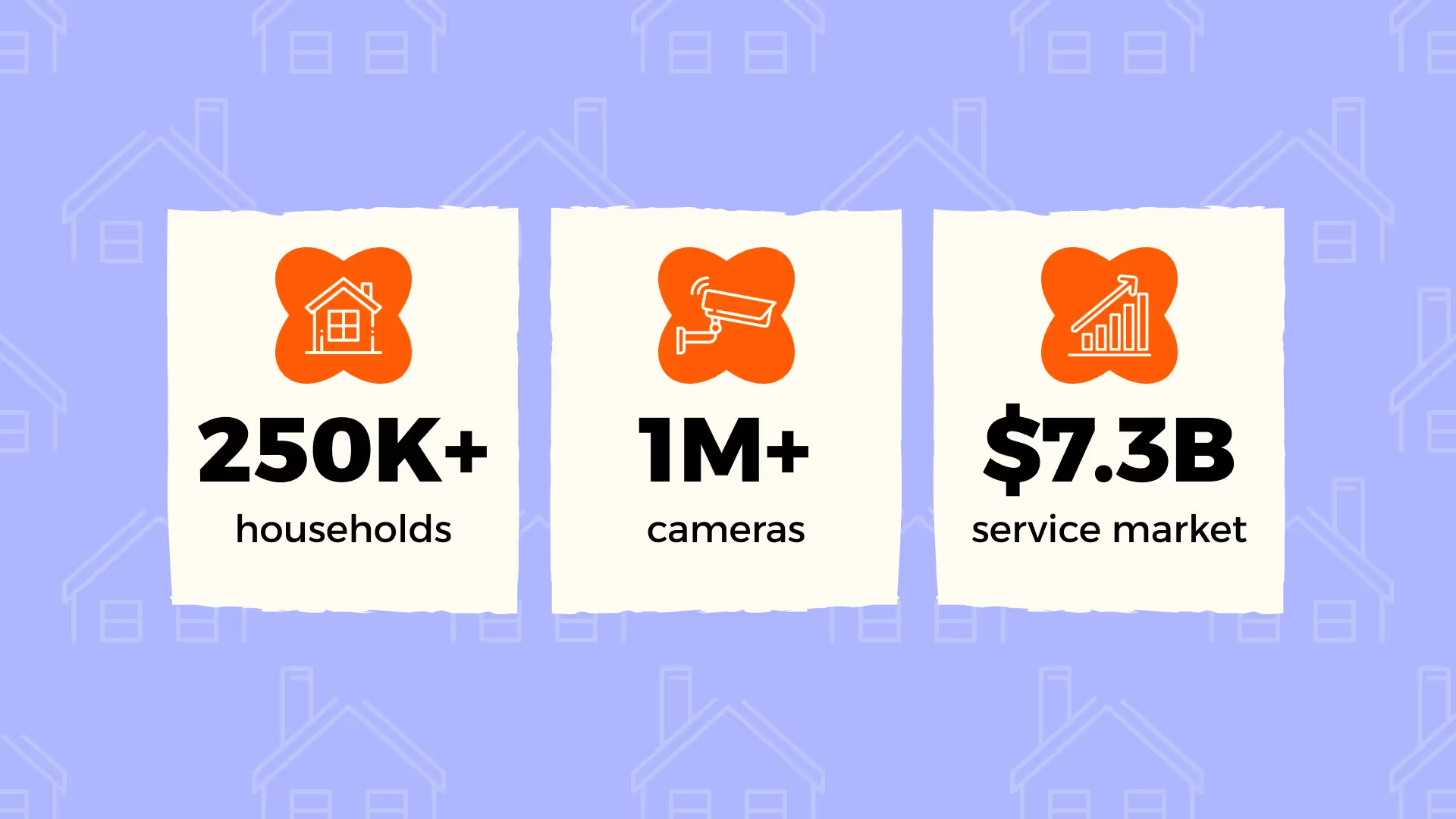
Why it worked: Owlr frames the opportunity around making existing IP cameras easier to use. The deck shows the device the customer already owns, the friction they face, and the task the software simplifies, giving the product a clear role alongside existing hardware.
Key lesson for founders: Start with the human use case, then define the technical and commercial boundaries. Explain supported devices, setup, and access permissions. Report connected devices, active users, and paying customers as separate measures because each answers a different question.
21. LinkedIn Pitch Deck
LinkedIn shows the value of a growing professional network before detailing its revenue paths.
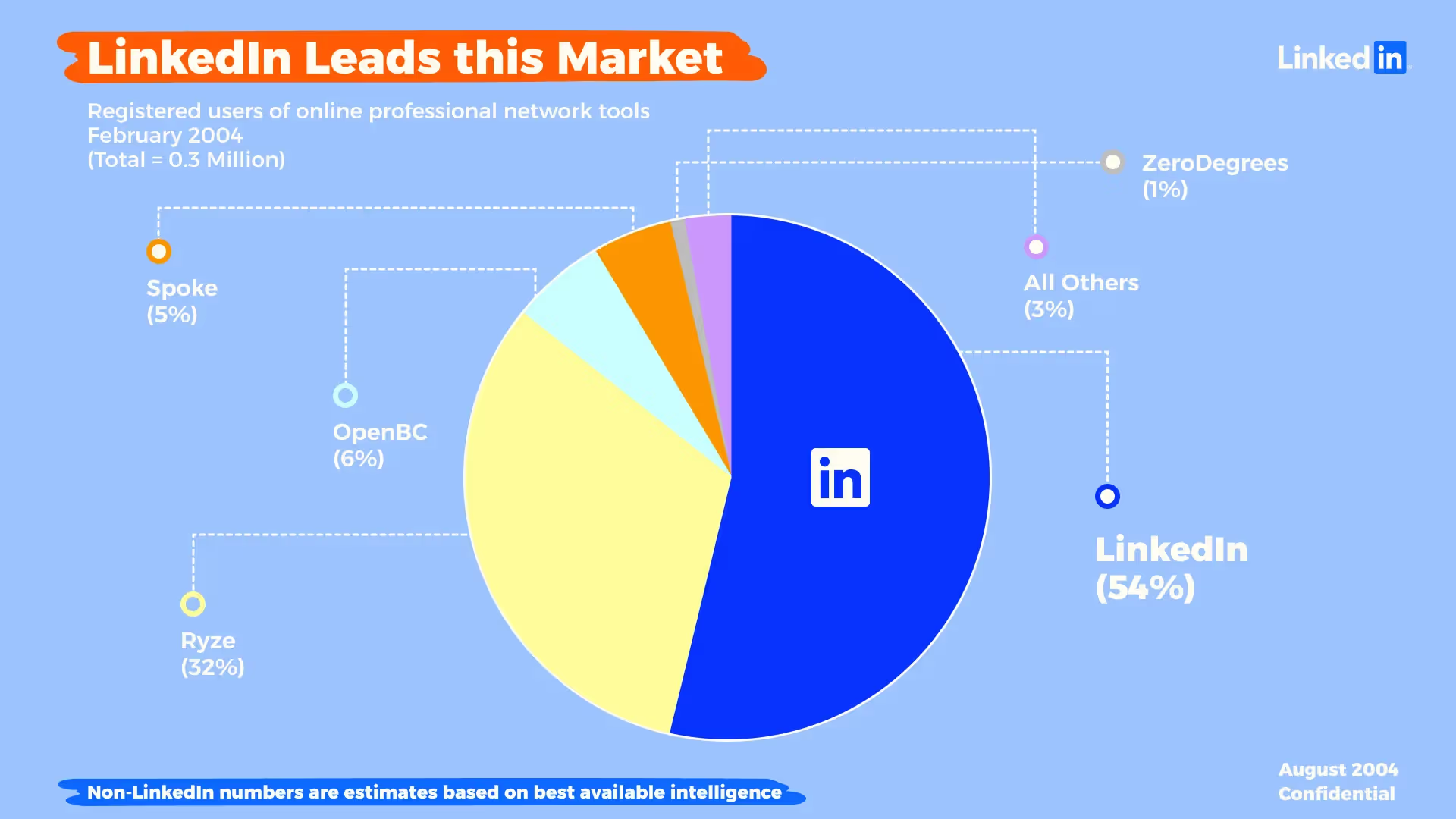
Why it worked: The network-growth slides compare the Series A forecast with actual adoption. Later slides connect the network to ads, job listings, and subscriptions, separating demonstrated progress from the revenue paths the next round would test.
Key lesson for founders: Explain how participation creates value and how the company expects that value to become revenue. Prioritize the first revenue path to validate, distinguish tested pricing from planned pricing, and show how paid conversion affects the forecast.
22. Intercom Pitch Deck
Intercom demonstrates how a short early-stage presentation can explain a product direction without pretending the company is already mature.

Customer communication software | 2011 seed deck | $600K, confirmed by co-founder Eoghan McCabe | 8 slides.
Why it worked: The eight-slide format keeps the team, customer problem, proposed product, and early progress close together. Readers can evaluate the direction without working through a long feature catalog, which suits a credible product idea with limited operating history.
Key lesson for founders: Present the strongest evidence available at the current stage and name what the round must establish. Revenue is not the only credible early signal: pilot behavior, customer interviews, product use, and a defined learning plan can support the story when the deck explains what each signal proves.
23. Beelinguapp Pitch Deck
Beelinguapp makes its learning approach tangible through the experience of reading and listening; market size remains supporting context.

Why it worked: Parallel text and audio give the reader a specific learning experience to evaluate. The branding supports an approachable consumer product, while the product sequence shows how learning actually happens.
Key lesson for founders: Show the experience, then measure the behavior and results that matter at the stage. Early evidence may come from qualitative tests or engagement. Later rounds should distinguish satisfaction, learning outcomes, downloads, retained users, and paid conversion. Any survey claim needs its sample and method.
24. The Plate Pitch Deck
The Plate turns a broad creator-economy idea into a specific proposition for people who teach and learn about food.

Why it worked: Culinary imagery establishes the audience quickly, while the subscription proposition gives creators a reason to participate beyond publishing content. The deck makes the value exchange visible for both creators and viewers.
Key lesson for founders: Explain the value for both sides and how the platform captures value. At an early stage, creator interest, audience tests, or willingness-to-pay can support the case. With more traction, show active creators, returning viewers, paying subscribers, retention, and revenue sharing as distinct measures.
25. Clare&Me Pitch Deck
Clare&Me brings an empathetic voice to an AI product, while highlighting why health-related pitches need unusually careful claims

Why it worked: Clare&Me introduces an AI companion through familiar interactions: phone calls and messaging. That makes the proposed support tangible before the technical explanation. The sequence – user, interaction, benefit – keeps the experience easy to follow.
Key lesson for founders: State where the product’s support ends and how situations beyond its scope are handled. Report engagement and clinical validation as different evidence categories. The standard of proof should reflect the risk of the health claim, with safety processes and escalation paths visible in the deck.
26. Moz Pitch Deck
Moz is valuable precisely because an engaging presentation and a growing business did not guarantee that the attempted round would close.
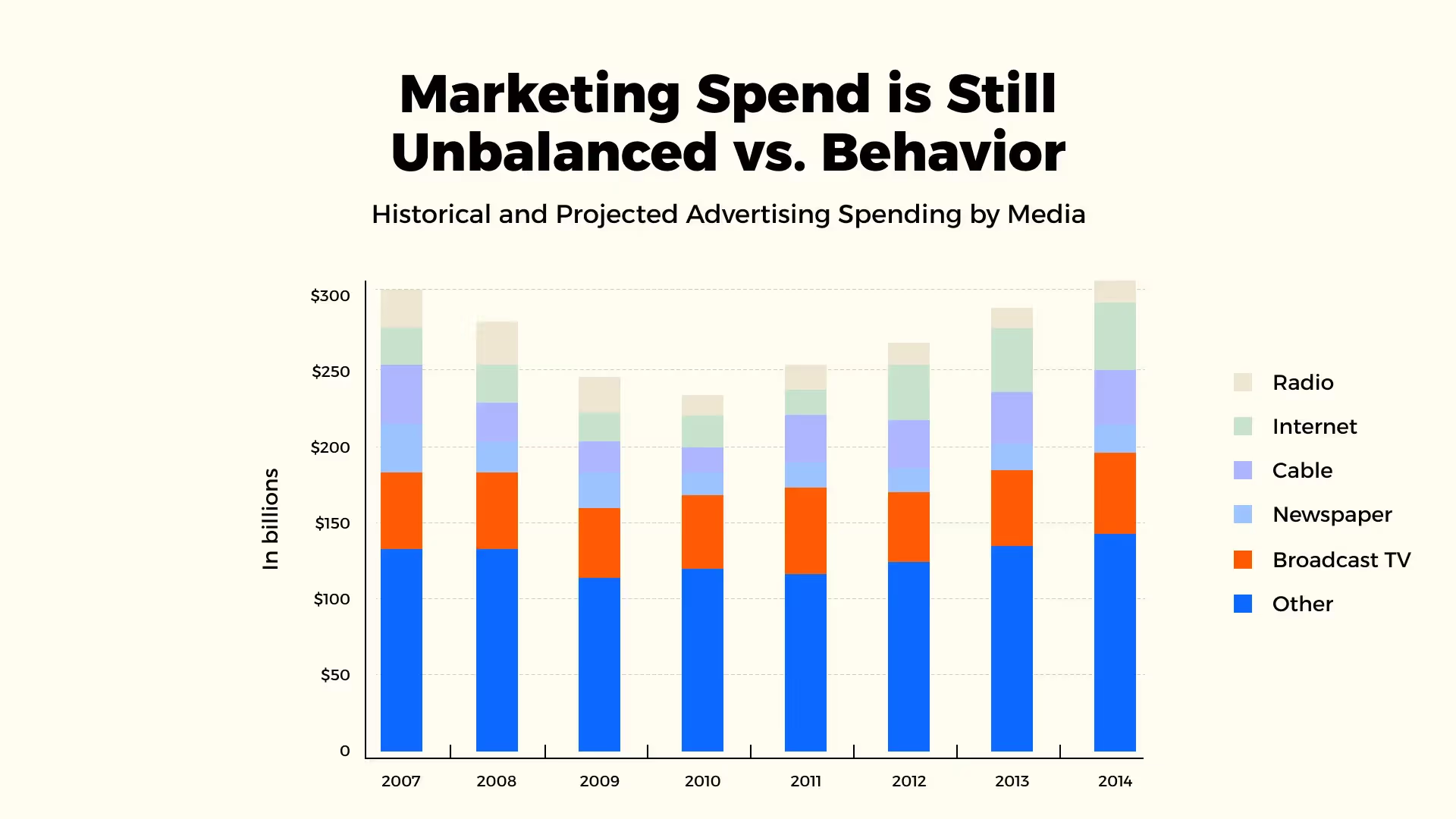
Why this example still matters: The deck combines a distinctive brand voice with operating detail. Rand Fishkin’s accompanying account explains why capital mattered: engineering capacity, data infrastructure, and new products. Those concrete uses make the growth story easier to evaluate.
Key lesson for founders: Put the funding purpose beside the milestones it should unlock, then align valuation and financing expectations in the investor conversation. Moz’s round did not close, which makes the example useful for studying investor fit and fundraising process alongside the presentation itself.
27. GamerzClass Pitch Deck
GamerzClass separates the ambition to reach gamers from evidence that some customers will pay to improve their skills.

Why it worked: The deck connects an inefficient learning experience to professional instruction, then introduces user and revenue measures. The progression turns a broad gaming audience into a more specific commercial proposition.
Key lesson for founders: Show a plausible route from audience interest to paid demand. Define conversion, repeat engagement, and instructor economics, and identify any redacted or unavailable figures. Our guide to deck key metrics explains why the definition, period, and source of a metric matter as much as its size.
28. Minut Pitch Deck
Minut places the physical product directly in the investment story and explains the service around it.

Why it worked: Minut connects property monitoring to guest privacy. Its sensor measures conditions such as noise levels without streaming audio recordings to the cloud. That clear privacy boundary makes the hardware and service easier to evaluate.
Key lesson for founders: Show how the hardware and service economics support each other. Early proof can include pilot use, installation behavior, and customer feedback. As the company grows, separate device revenue from subscriptions and add hardware margin, replacement costs, and subscriber retention.
29. Sickweather Pitch Deck
Sickweather illustrates both the appeal of predictive data and the need to define what a prediction claim actually means.
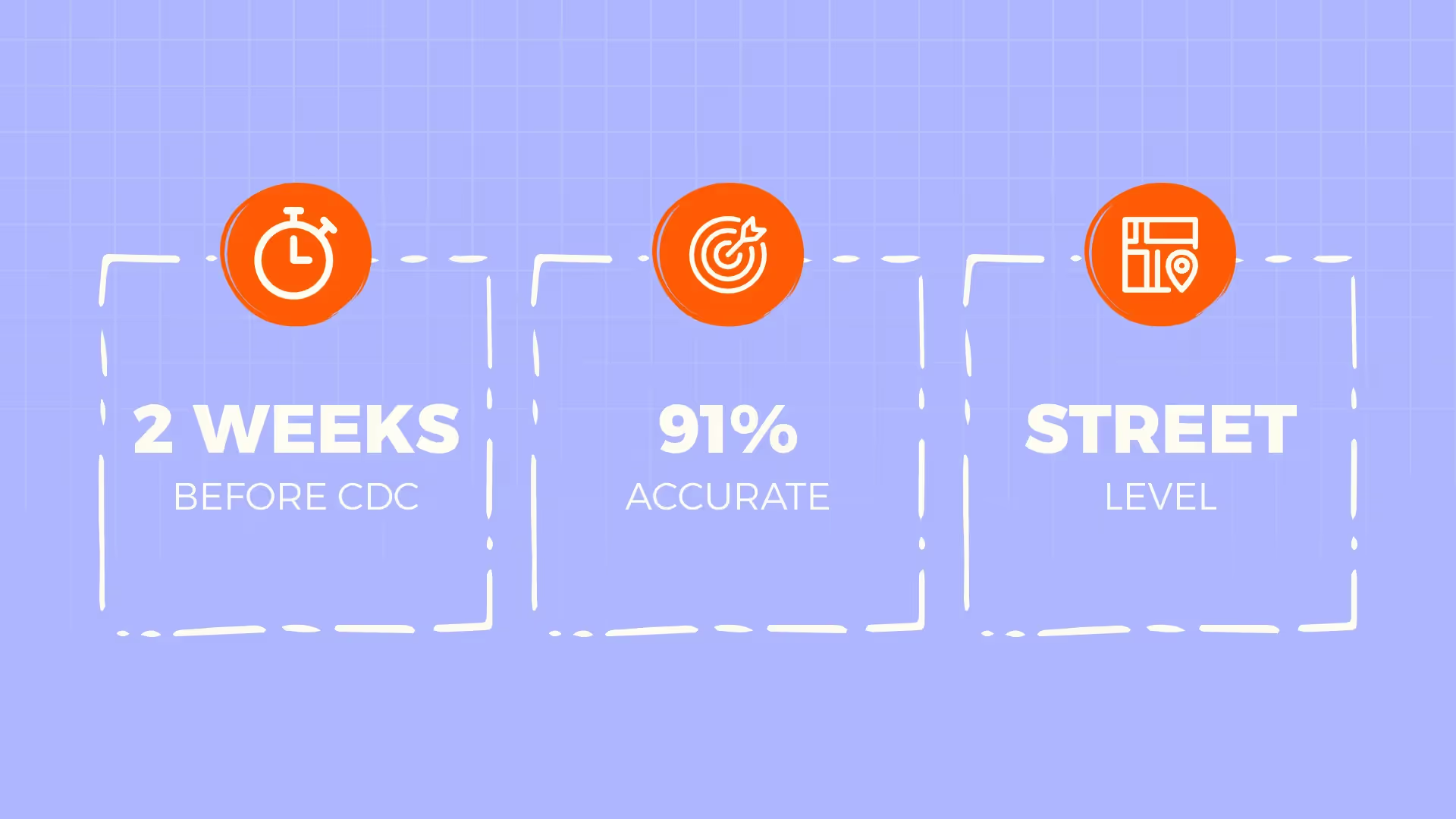
Why it worked: Commercial metrics and team expertise give the forecasting story a business context. The deck reports $42,000 in monthly recurring revenue for the second half of 2016, providing historical evidence that the product had paying demand.
Key lesson for founders: Make validation more visible as the consequence of the claim increases. Put the evaluation period, dataset, and limitations beside any accuracy figure. Forecasting performance, revenue, and a lives-saved claim require different evidence and should be presented separately.
30. Tealet Pitch Deck
Tealet connects its mission to the way money moves through the supply chain.

Why it worked: The deck contrasts conventional distribution with a marketplace model and explains the proposed share retained by growers. The comparison connects the company’s mission directly to how value is distributed in the business model.
Key lesson for founders: Define whether each percentage represents revenue share or margin, then show shipping, quality control, working-capital needs, and the functions previously handled by intermediaries. Early evidence can include supplier commitment, buyer interest, and initial unit economics before repeat-purchase data is available.
What the Best Startup Pitch Decks Have in Common
Across these examples, six choices make the business easier to evaluate. Each one strengthens the argument or the evidence behind it; visual style and slide count come later.
Story before polish. ClearPath needed to explain a real-estate analytics platform, but its deck was cluttered and hard to follow. At Whitepage, we simplified the language and reorganized the information, then refreshed typography, layouts, and visuals. The lesson: fix the explanation as well as its appearance.
One main point per slide. Give each screenshot or chart a takeaway. In our presentation design services, visual hierarchy supports that message: the reader should know where to look and why the information matters.
Stage-appropriate evidence. A prototype, paid pilot, and recurring customer expansion prove different things. Intercom’s early product direction and Front’s Series A economics illustrate that distinction.
A specific market. Airbnb separates hosts from travelers; MapMe distinguishes organizers from map visitors. Define the people whose participation your model needs, then explain who pays.
A defensible difference. TransferWise compares payment approaches; Owlr focuses on existing cameras. Use the alternatives a customer would actually consider and explain the criteria that matter to the decision.
A clear funding purpose. Intercom’s early product story and Front’s growth-stage evidence serve different funding decisions. State what the capital must accomplish and how progress will be measured.
How to Use These Pitch Deck Examples
Choose two or three relevant startup pitch decks: one for your stage, one for your business model, and one for a specific communication challenge. A technical founder might compare Intercom’s concise opening with Pepper Bio’s explanation of complex science.
Identify the question behind a useful slide, then answer it with your evidence. If you cannot support the same claim, change the argument. Never reuse another company’s historical market data or projections as your own.
Adapt for delivery: sparse slides may work with narration, while an emailed deck must stand alone. Creative pitch deck examples are useful when design improves understanding. For the next step, read how to build a pitch deck; if your story needs outside help, explore our pitch deck consulting services.
Create an Investor-Ready Pitch Deck With Whitepage
Use these examples to decide what evidence belongs on each slide and what question the next slide must answer. Their visual style is secondary to the logic of the investment case.
Whitepage combines discovery, storytelling, and design to create professional presentation decks for your audience and goals. We can help turn scattered material into a focused fundraising pitch deck with editable slides.
Frequently Asked Questions
What Makes a Startup Pitch Deck Successful?
It helps an investor understand the opportunity, assess the evidence, and choose a next step. Explain the customer problem, solution, market, business model, team, progress, and funding purpose without overstating certainty.
How Many Slides Should a Startup Pitch Deck Have?
Start with roughly 10–15 core slides and an appendix for supporting detail. Treat that as an editorial starting point and adjust it to the stage, audience, and complexity of the business. Intercom’s eight-slide early deck and LinkedIn’s longer Series B presentation served different situations.
Where Can I Find Original Startup Pitch Decks?
Start with founder blogs, company publications, and investor retrospectives, such as the sources for Front, Intercom, LinkedIn, and Coinbase. Archives offer more pitch deck samples, but check version, date, and attribution.
Can I Use Another Startup’s Pitch Deck as a Template?
Study its reasoning and structure. Do not copy company claims, forecasts, branding, or proprietary material; check the terms before reusing assets.
Do Successful Pitch Decks Guarantee Funding?
No. Investor fit, diligence, terms, and business performance also matter. The often-cited estimate that 90% of startups fail describes company outcomes rather than pitch deck effectiveness. Moz’s unsuccessful 2011 attempt shows why a well-developed pitch deck and a closed round are different outcomes.
Should a Pre-Seed and Series A Pitch Deck Have the Same Structure?
Pre-seed may emphasize insight, team, prototype, and customer learning. Series A needs a stronger account of adoption, retention, acquisition, and growth economics. Treat venture capital pitch deck examples as stage-specific references.
What It’s Like To Work With Us
reviews

867 BOYLSTON ST
BOSTON, MA 02116


