





























.avif)

.avif)
.avif)



























Get a guide to creating pitch decks presentation



.png)

For years, founders followed a rigid formula: Cover, Problem, Solution, Team, Traction, Competition, Business Model… you get the idea. But it’s been 17 years since the 2008 startup boom. Attention spans have shrunk. The economy has shifted. Investors are now even getting pitched via TikTok! Storytelling has taken the stage over pie-charts.
What you want a pitch deck to do is to tell investors the compelling story about your company. A story that covers all the points above, not as disconnected dry numbers, but as a gripping movie trailer.
How?
Do these four things, and you’ll instantly level up your deck’s chances:
Now, let’s see how you can approach your pitch deck through new optics, while keeping the structure and must-haves intact.
Before you even open PowerPoint or Canva, remember: the pitch deck isn't about closing a deal on the spot. That's an impossible goal.
The goal for the pitch deck is to say one thing that is so interesting to the audience that they want to talk again.
At an early stage, your idea is still a bit of magic, and investors love to imagine the possibilities. Don’t kill the imagination. If you hook them enough to start thinking about it on their own, odds are you can get them to invest.
The key of successful pitch deck design is to tell this story with the passion and drive that your idea deserves.
Pro Tip: When you hear someone else's pitch, you naturally have questions. How is this different from X? What does Y mean? Can you really build this as a team? Always try to answer those anticipated questions in the next slide. If not, people will get stuck on that question and not follow your storytelling.
Investor's Question:
"What do you do (in one sentence)?"
This is your first impression, so make it count. Don't start with the team slide or a table of contents.
The first 2-3 slides are the door opener; they need to spark curiosity. Don’t be afraid to be direct or controversial. The only real sin here is being boring.
Make a statement on the cover page with a concise one-liner describing what you do: “We help X achieve Y – at only Z% of the cost.” This makes people curious: “Okay, and how do they do that?”
Pro Tip: This slide stays on the screen the longest. While you’re switching places with the previous startup, during technical setup, and during small talk. Make good use of it.
.webp)
Investor's Question:
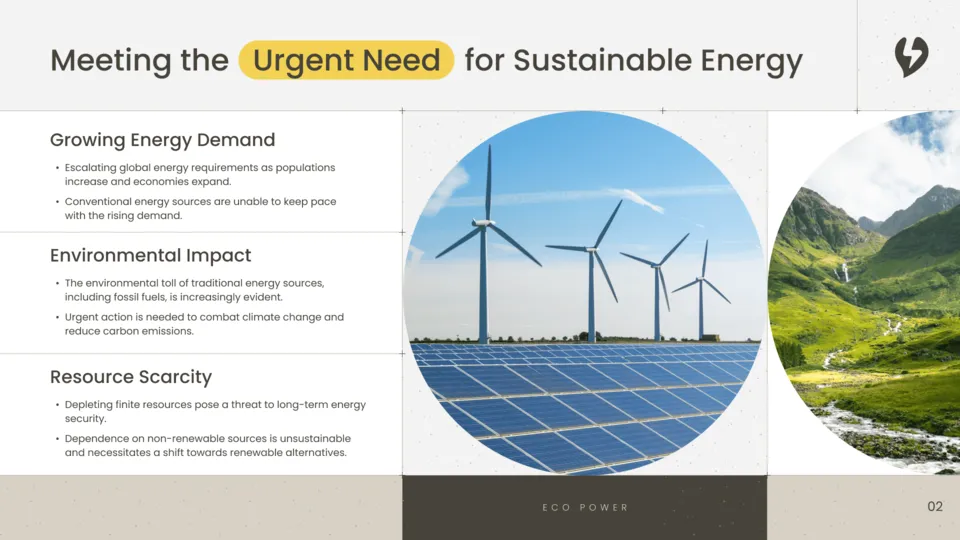
"Is this a real, significant, and urgent problem?"
As founders, the problem is completely clear to you. Don’t expect investors to be as aware; assume that they don’t know anything. Explain even the obvious problems. Make sure you highlight the scope of the problem.
The tactics to use are:
Be impactful, but succinct – there will be time for in-depth questions later in the Q&A session.
Investor's Question:
"Is your solution a compelling and direct answer to the problem?"
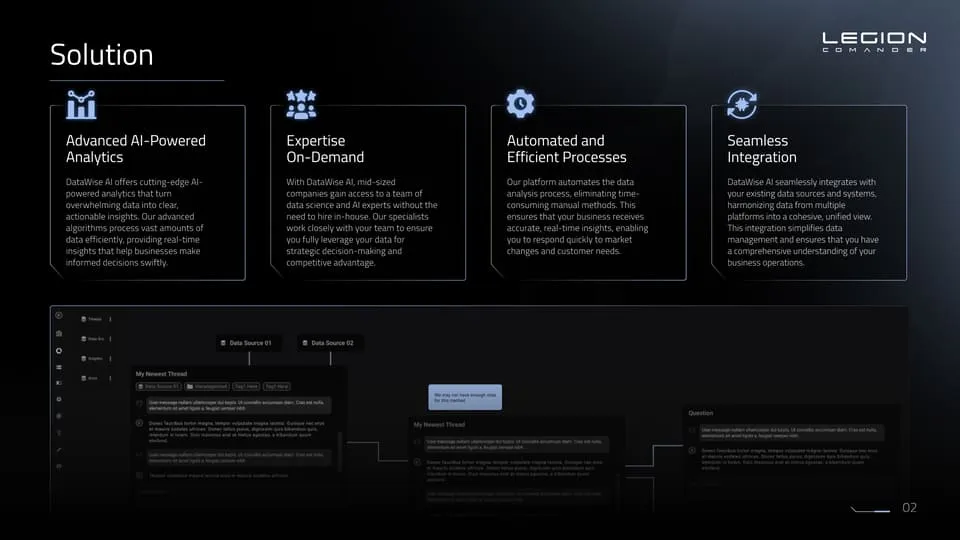
Answer your problem with one solution. It’s even better if it has already had an impact on your target audience. If you started with the emotional, personal story of facing a problem, keep it up with personal insight into overcoming it with your solution.
Distinguish between your high-level solution concept and the actual product implementation. Those are normally two different slides, but sometimes you don't need two for that. Think of it like this – startups pivot and tweak the product a lot, the solution not so much.
Investor's Question:
"How tangible is this? Show me the product."
Investors have heard a lot of big ideas; now they want to see if you can actually build it. Show your goods via a high-fidelity mockup, a screenshot, or a short demo video.
Walk them through the "aha!" moment to show how a user actually feels when they interact with your product.

Investor's Question:
"Is this opportunity big enough to generate a venture-scale return?"
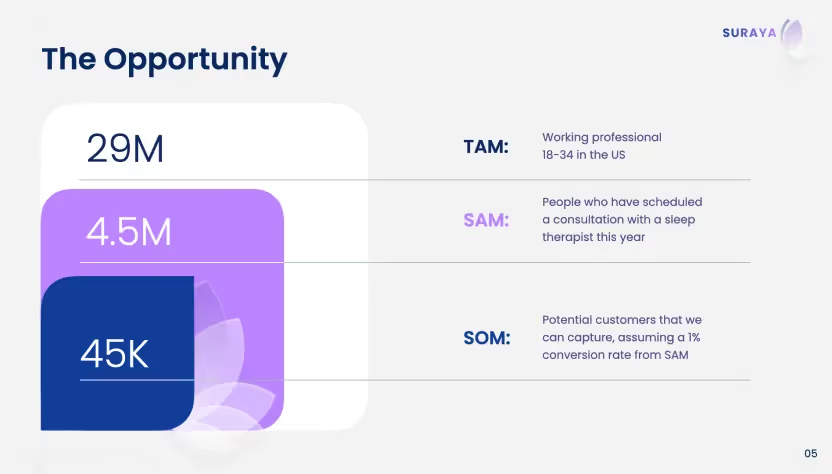
The product is only good if someone wants it. Total Addressable Market (TAM), Serviceable Addressable Market (SAM), and Serviceable Obtainable Market (SOM) circles are the usual way to show the market size.
Use a bottom-up approach to present how your pricing model, average revenue per user, and achievable customer acquisition numbers incrementally build up to a compelling market share. Back up your projections with market data.
The market size slide is a litmus test for investors to gauge how realistic founders are in their thinking about the percentage of the market they'll capture.
And don't say ”targets all people” – investors hate that. Pick a specific market. Small markets are ok, investors can be open to those, too, if you can show that you can dominate them.
Pro tip: Never inflate your numbers. Trying to play investors will close doors faster than anything.
Investor's Question:
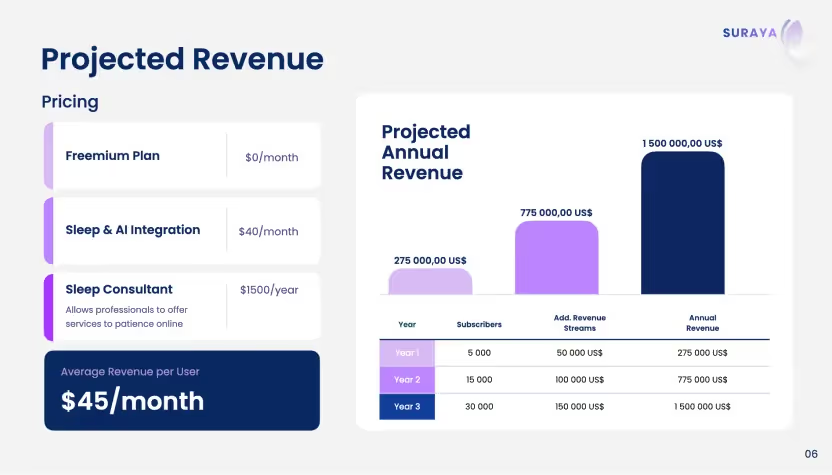
"How exactly do you make money?"
How does your product or service actually make money? Pick your top 1-3 revenue streams and explain them. Don't overcomplicate it. Investors just want to know your core strategy behind the business plan for getting paid: subscription fees, transaction percentages, ad revenue, or something else?
How do you price it? Per user? Tiered plans? Is there a freemium layer?
If you've got some early numbers, even better. Show your Customer Acquisition Cost (CAC) and how it stacks up against the Customer Lifetime Value (LTV).

Investor's Question:
"How will you reach customers and acquire them efficiently?"
And now that you’re speaking of customers, make a smooth transition to your Go-To-Market Strategy. How are you going to get customers?
Instead of listing channels, tell a story of how you'll reach your customers. Who exactly are you going after? What’s your Ideal Customer Profile (ICP)? Define your target personas and show that you know how to get them via content marketing, LinkedIn ads, partnerships – whichever it is.
Walk them through the whole journey: finding a potential customer, converting them, and keeping them happy. This will prove you thought everything through.

Investor's Question:
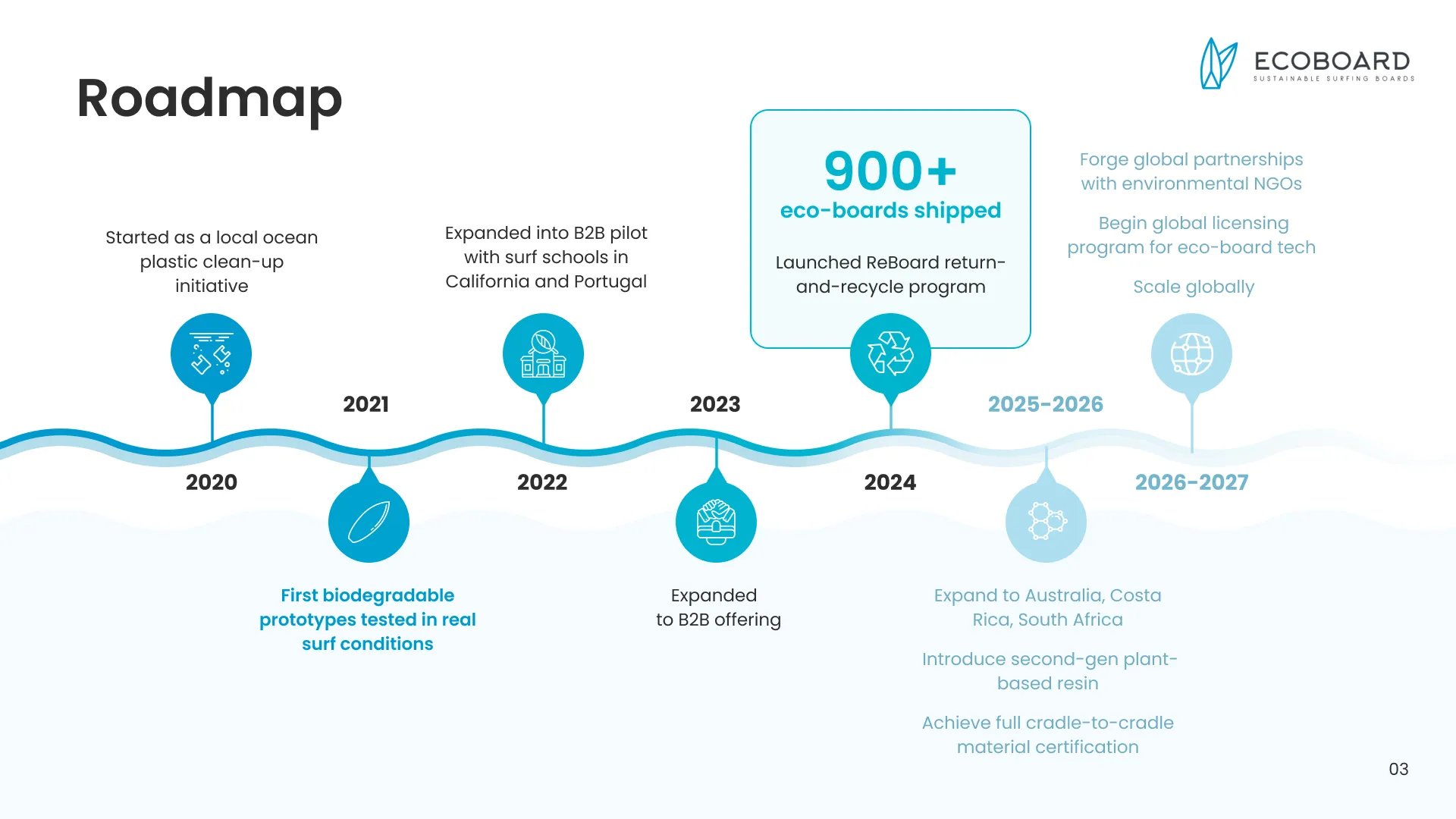
"What have you proven so far?"
How can you prove your go-to-market works? Show that you have a line of people ready to pay for what you’re building.
Select 1-4 metrics that really matter to you and show you're moving in the right direction.
Do not use vanity metrics; stick to the tangibles like pre-orders, sales, revenue, etc. Show charts if you can to make it visual.
Investor's Question:
"Who are your competitors, and why are you different and better?"
It’s not as much about competitors as about telling how the potential customers were solving your problem before. Remember – for some SaaS, the biggest competitors are pen and paper.
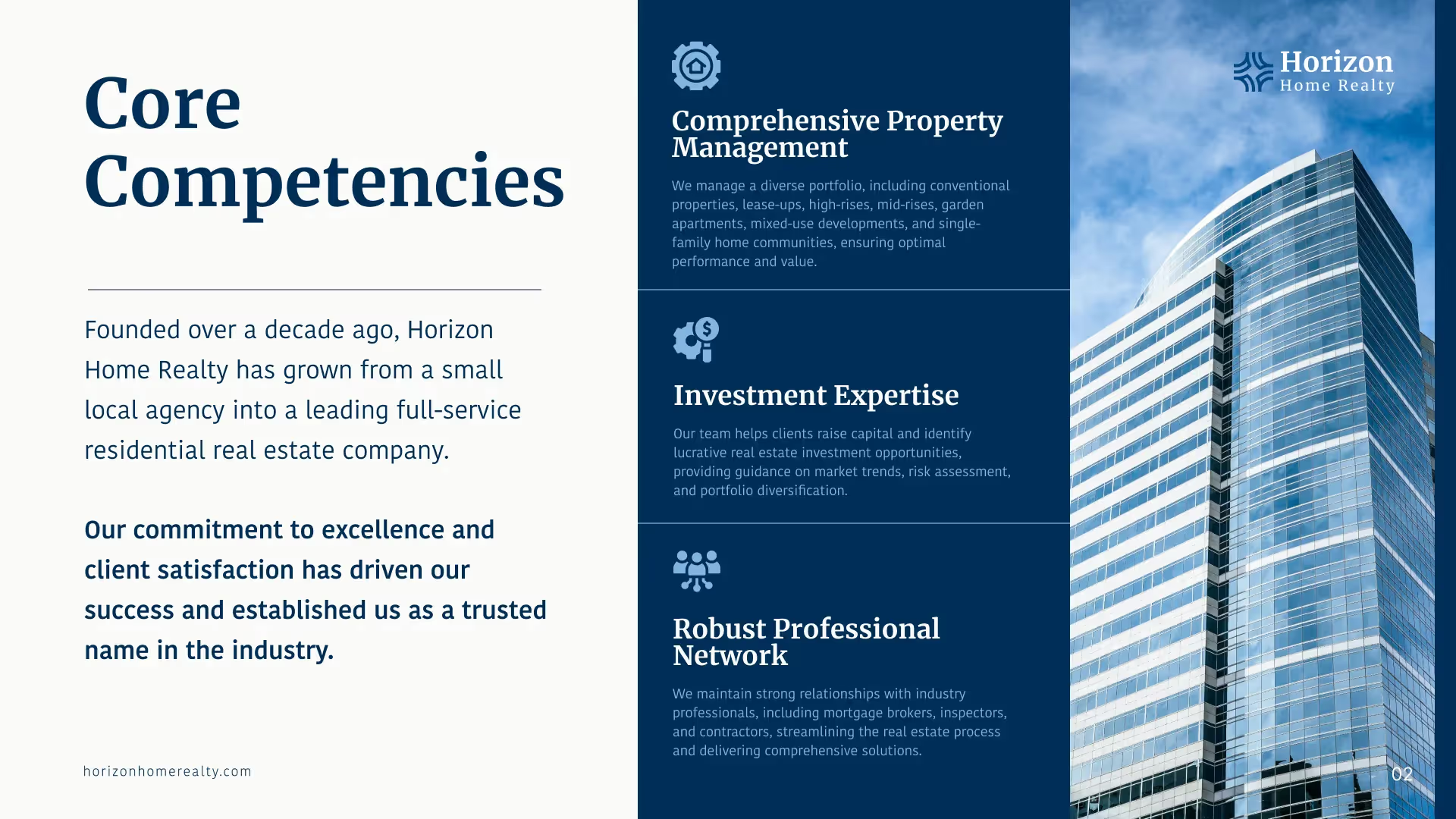
Acknowledge the competing solutions and differentiate yourself by showcasing your unique advantages (traditionally, core competencies) and key differentiators in the market. You should make it as easy as possible for investors to understand your value proposition in relation to the market.
Investor's Question:
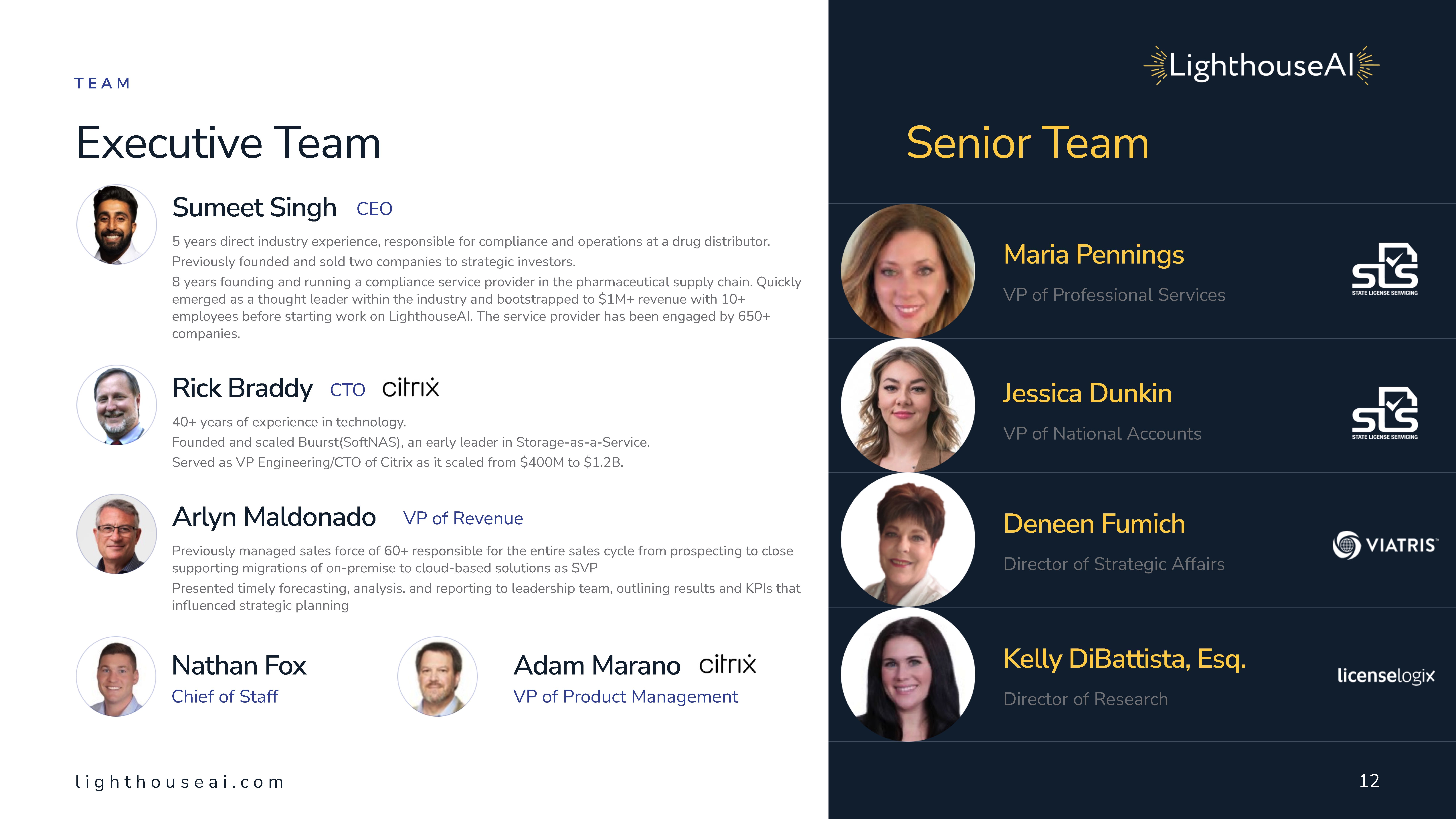
"Is this the right team to win this market?"
After you’ve talked about competitors, it’s only logical to explain why investing in you is the winning stake. Investors care about it more than you think, especially in pre-seed and seed.
Highlight your founding team's relevant experience, skills, and knowledge that position you to build and scale the envisioned solution effectively.
Most of all, make sure your Team slide answers “Why you?” and not just “Who you are?”
Pro Tip: Highlight how long you have worked together and know each other. If you have a history together, it builds trust.
Investor's Question:
"What are the key assumptions behind your financial model?"
So, how long will it take your dream team to get profitable? Focus on showing a clear path to revenue. Add important milestones. Ideally, also the breakeven point, new markets, etc.
Due to the usual investor/funds life cycles in the market, VCs most often want to see a growth rate that supports exit within 5-7 years. Do the homework on the investors you’re meeting, and if this timeline is the case, consider shaping this slide according to the best practices of financial modeling to answer their expectations.
Investor's Question:
"How much are you raising, and what will you achieve with it?"
The moment of truth. Be specific. Specify funding amount, terms, committed funds, and exactly why investors should want to commit right now. Not in a couple of months. Not in your next round. Tell them why missing this train would be a horrible thing to do.
If you wrote your story correctly, you won’t have to break down the use of funds (30% scaling team, 10% marketing, etc). Instead, you can say, "With $1M, we can achieve profitability in 18 months." Every single one of your previous slides should tell the story of how you are going to do this.
This is your close, so be confident, declarative, and encourage clear action.

You’ve got the structure, you’ve got the story, and you know the common traps. To truly nail that pitch deck, here are a few final tips from Whitepage experience for a thoughtful pitch deck structure.
Effective pitch decks succeed because the structure is clear long before the design is polished. In our experience, the strongest decks aren’t built by starting with slides, but by first aligning on the story: what the audience needs to understand, in what order, and why it matters.
A useful starting point is separating narrative from design. Before investing time in visuals, it’s important to lock the storytelling of the pitch deck – often through a wireframe or content-first outline that defines each slide’s purpose. This allows teams to resolve messaging questions early and prevents decks from becoming overdesigned but underdeveloped. Design then becomes a tool to reinforce clarity, not a distraction from it.
Slide discipline is equally important. Most high-performing pitch decks fall between 10 and 20 slides. This constraint forces prioritization and keeps the narrative focused on what truly moves the conversation forward. Rather than trying to answer every possible question, the deck should guide the audience toward the right ones. Detailed data, assumptions, and deep dives are often better placed in an appendix or follow-up materials.
We also recommend thinking in terms of one idea per slide. Slides are prompts, not documents. Clear, singular messages – supported by simple visuals – are far more effective than dense text or complex charts. When comparisons are needed, clarity usually improves by highlighting conclusions rather than presenting raw data.
Finally, structure should always reflect the audience. Investor decks tend to follow a familiar logic around problem, solution, validation, market opportunity, and financial potential. Customer or partner decks often lead with impact and outcomes. When a deck needs to work in multiple settings, creating separate versions is usually more effective than forcing one deck to do everything.
If you’re reworking a pitch deck for fundraising, a board presentation, or a strategic inflection point, we can support at different levels of pitch deck design – from stress-testing structure and narrative, to full deck development. Our team has built and refined hundreds of investor, executive, and enterprise decks across technology, healthcare, real estate, and emerging markets, often partnering closely with founders and leadership teams under tight timelines. If an experienced outside perspective and additional muscle in your team would be helpful, we’re always open to a conversation.


In pre-seed/seed, it’s Problem, Vision, and Team. Nail the problem, solution, and value proposition, and show a clear path in your Go-to-Market strategy. In Series A, the focus shifts to Traction, Go-to-Market scalability, and repeatable unit economics. You need to show that your business model is working and can be scaled efficiently.
There's no magic number. Most successful pitch decks land between 10-15 slides for a live presentation.
Your pitch deck should read like an intriguing story. Start with a declarative opening, build a clear narrative arc from problem to solution to market opportunity, show your team's ability to execute, demonstrate traction, and end with a clear ask.
While every slide plays a role, many experts state that the Problem slide is arguably the most important. If investors aren't convinced there's a real, significant problem, they won't care about your solution, your market, or your team.


867 BOYLSTON ST
BOSTON, MA 02116


