





























.avif)

.avif)
.avif)


























Get a guide to creating pitch decks presentation



.png)

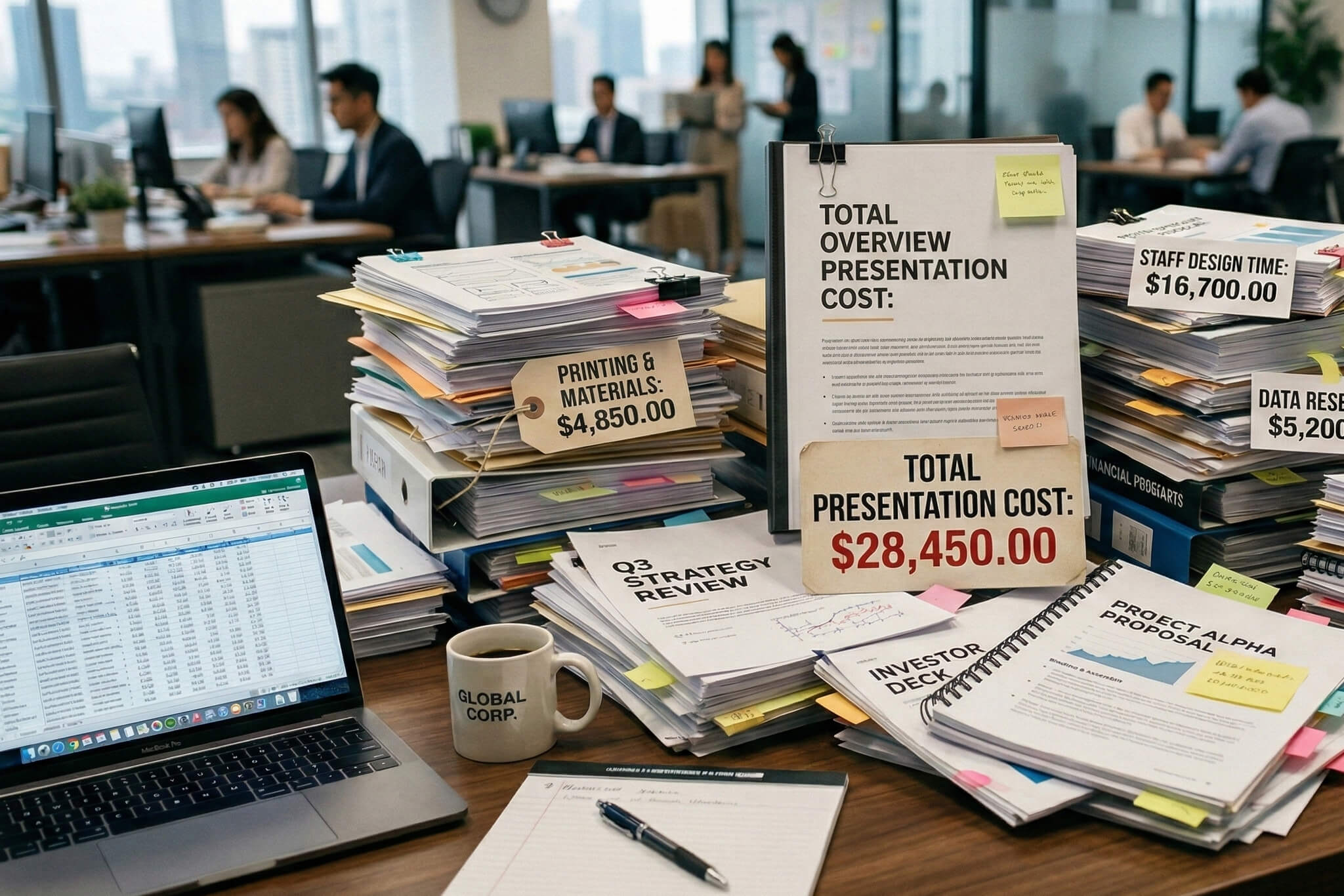
A few months ago, a founder shared his screen on a Zoom call with us. Sixty-two slides. Spectral analysis charts. A glossary of acronyms that could fill a college textbook. He'd been pitching this deck for five months. Two partners at a top-tier fund had told him his technology was "fascinating." Neither wrote a check. "Investors don't get us quickly," he said. He was right: but science wasn't the problem. The story was.
Deep tech founders face a paradox that SaaS and consumer startup founders never encounter: the very complexity that makes their technology defensible is the same complexity that makes it nearly impossible to pitch. And with a third of all global venture capital now flowing into deep tech, up from just 11% a decade ago, founders who can't translate their science into a compelling narrative are leaving serious money on the table.
This guide breaks down how to build a deep tech pitch deck that works. Not a prettier version of your research paper. Not a SaaS template with your logo swapped in. A deck built around how deep tech investors actually make decisions.
A deep tech pitch deck demands a fundamentally different approach from a typical startup deck. Here's what matters most:
Something shifted in the funding landscape over the past five years, and many founders haven't noticed. Deep tech isn't a niche anymore. In Europe alone, deep tech startups pulled in €15 billion in VC funding in 2024, representing 28% of all European venture capital; they maintained roughly the same share in 2025. Quantum computing startups raised $1.9 billion across 62 deals that same year. Nuclear fusion ventures attracted $2.64 billion between mid-2024 and mid-2025.
The money is there. But here's the uncomfortable part: the pitch decks aren't keeping up.
Most deep tech founders still default to one of two broken templates. Either they build an academic presentation, which is dense, jargon-heavy, structured like a conference paper, or they grab a SaaS-style deck template and try to jam quantum physics into a "problem-solution-traction" format that was designed for B2B software. Here are some pitfalls of each approach – and a perfect balance for a deep tech startup.
Here's a statistic that should keep every deep tech founder up at night: more than half of deep tech startups fail within five years. And when you strip away the engineering challenges, the root cause of most of those failures isn't the technology at all — it's communication.
Poor messaging shows up everywhere. Fundraising stalls because investors can't clearly articulate the opportunity to their own partners. Customer acquisition suffers because prospects don't understand what you're building or why it matters. Even internal teams drift out of alignment when the core narrative is fuzzy.
One deep tech communications expert put it bluntly: founders lose millions because they can't give investors the language to talk about them when they're not in the room. That's exactly what your pitch deck needs to do. It's not a slide show; it's a proxy for you in every meeting where you're not present.
We hear variations of this from founders constantly. "We've gone back and forth 15 times." "My designer doesn't get it." "The deck feels chaotic." These aren't design problems. They're thinking problems. The visual storytelling matters, absolutely, but it can't fix a story that was never structured for the audience reading it.
A standard startup deck follows a predictable rhythm: problem, solution, traction, team, ask. Deep tech decks need a different architecture because investors are evaluating different risks. Here's the framework we've developed over 12 years of building pitch decks for science-driven companies.
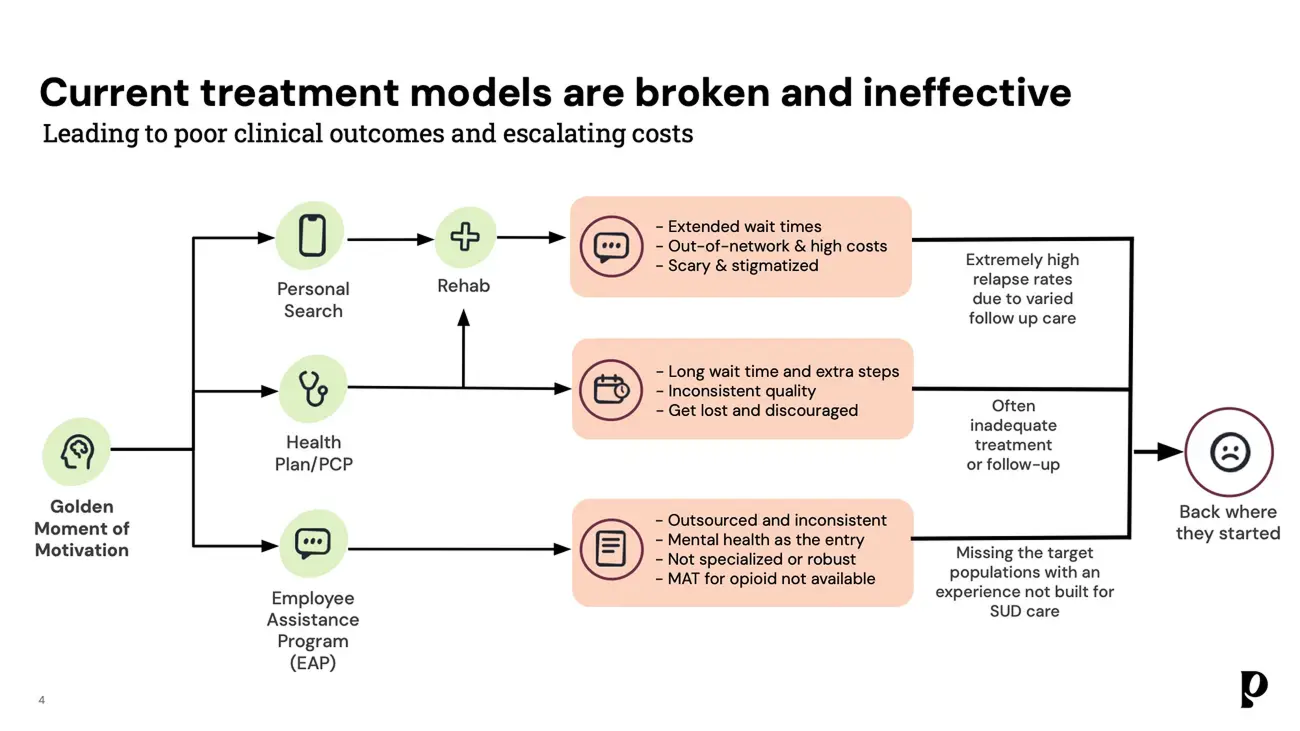
This is where most deep tech founders go wrong first. They lead with their technology because it's what excites them. But investors — even deep tech-focused ones — need to feel the weight of the problem before they care about the solution.
Frame the problem with data. Make it tangible. A strong problem slide doesn't explain your science — it explains why the world needs your science. If you're building a carbon capture platform, the opening isn't about your membrane chemistry. It's about the 36 billion tons of CO2 emitted annually and the fact that current solutions capture less than 0.1% of it.
This is unique to deep tech and it's where decks live or die. You need to show proprietary IP — patents filed and granted, experimental validation, prototype benchmarks. But you also need to show scalability: manufacturing yields, throughput constraints, energy consumption realities.
The trap is turning this into a research poster. Your goal isn't to prove you're a brilliant scientist. Your goal is to prove this science becomes a business. Show which technical assumptions you've already validated and which risks remain. Investors respect honesty about uncertainty far more than false confidence.
Here's something that surprises founders when we walk them through it: deep tech investors view technical risk differently than most people assume. According to a BCG and Hello Tomorrow survey, 69% of deep tech investors say market risks aren't actually higher than technical risks. And there's a reason for that.
Technical risk in deep tech has a unique property; once it's resolved, it rarely goes backwards. A competitor can't replicate your breakthrough just by hiring more engineers. They'd need years of R&D, specialized equipment, and often the exact domain expertise that your founding team has. That's a moat that compounds over time.
Your IP slide should make this concrete. Not just "3 patents pending", but what those patents cover, what they protect, and why replication would take a competitor years, not months.
For biotech, cleantech, nuclear, and medical device startups, your regulatory strategy isn't a footnote. It's a core part of the investment thesis. Show the timeline to approvals, any agency engagement you've already started, and, if possible, that you've hired advisors with successful regulatory track records.
Funds like Breakthrough Energy Ventures operate on 20-year investment horizons specifically because they understand deep tech timelines. They're not scared of long regulatory pathways. They're scared of founders who haven't mapped them.

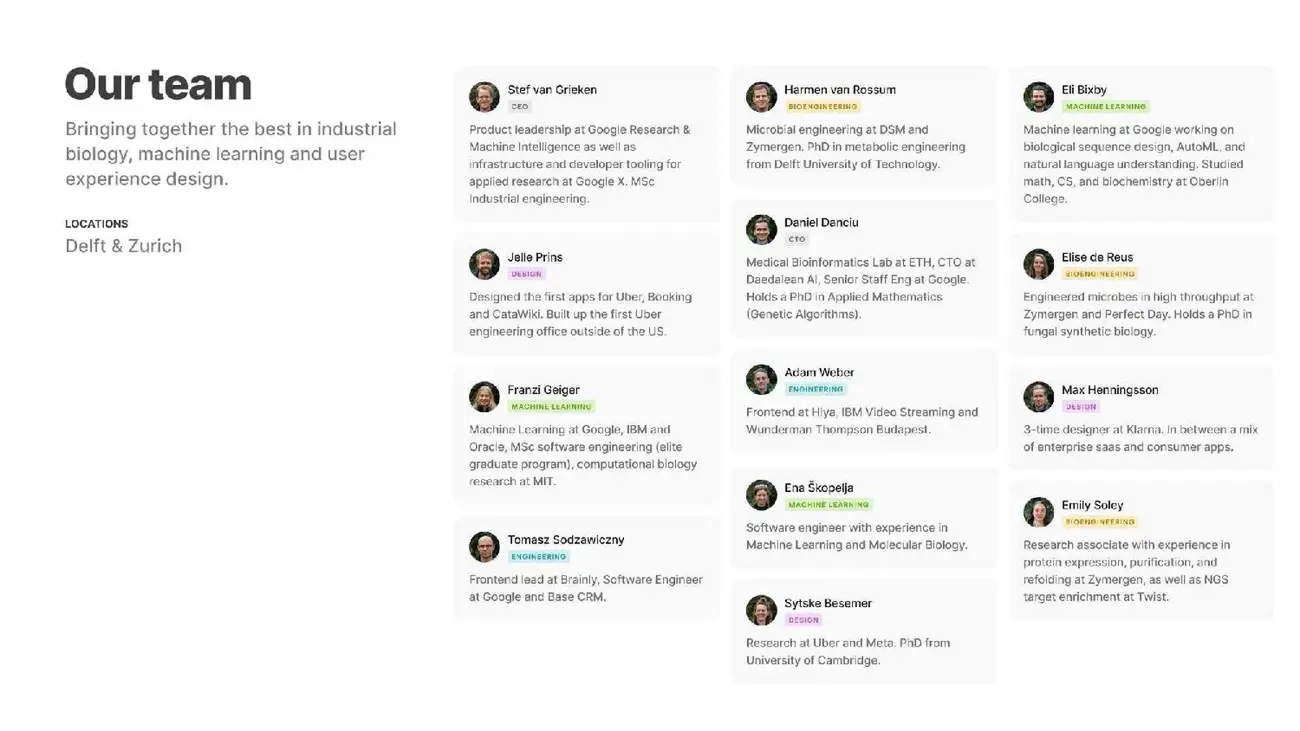
In deep tech, investors are betting on the team's ability to cross the chasm between scientific breakthrough and commercial reality. Your team slide needs to show both: PhD-level domain expertise and the business acumen to turn that expertise into a company.
Advisory board names carry real weight here. If a recognized authority in your field has agreed to advise your startup, that's a credibility signal investors take seriously. Show the combination:
deep scientists who can also speak the language of unit economics, supply chains, and go-to-market strategy.
What changed to make your solution possible today? Maybe a sensor cost curve hit an inflection point. Maybe a regulatory shift opened a new market. Maybe a breakthrough in adjacent technology, like the AI revolution accelerating drug discovery, created an opportunity that didn't exist three years ago. Whether you're preparing a product launch presentation or a fundraise, the "why now" framing is what separates a compelling narrative from a science fair project.
This slide answers the investor's silent question: "If this is such a good idea, why hasn't someone built it already?" The answer needs to be specific, not hand-wavy.
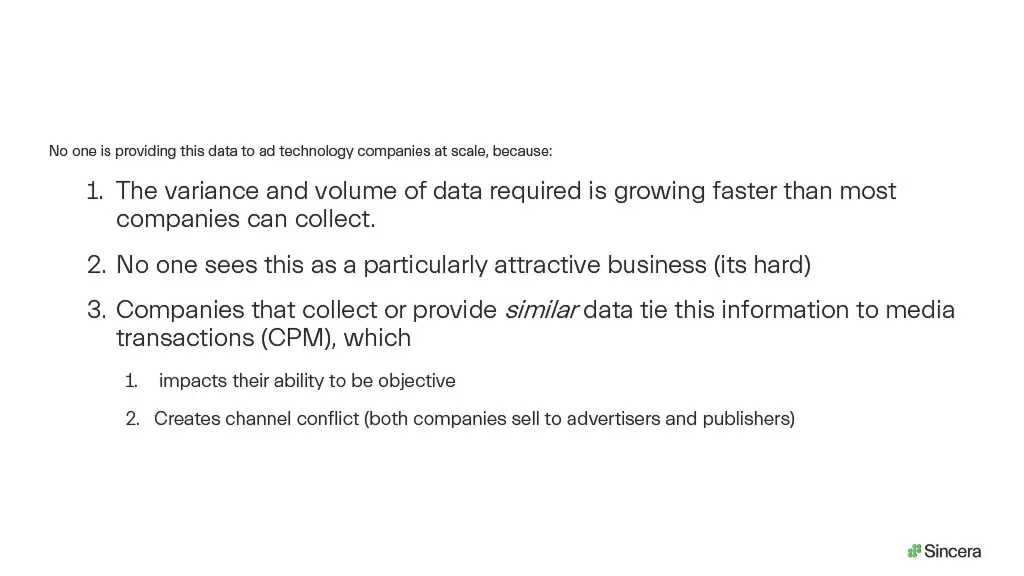
TAM for markets that don't exist yet
Deep tech companies often create markets rather than capture existing ones. That makes the standard TAM-SAM-SOM Venn diagram nearly useless. Instead, show market creation potential: what becomes possible that wasn't before? Size it from the bottom up with real assumptions — not a top-down slide claiming you'll capture 1% of a trillion-dollar market.
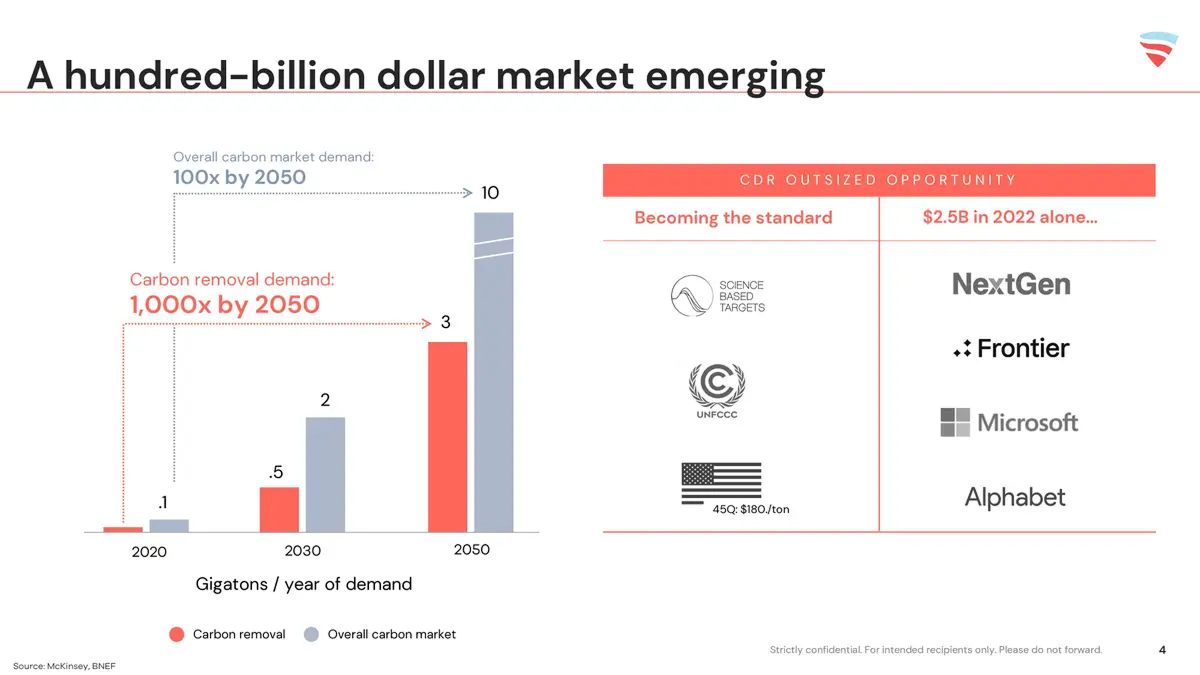
Most deep tech startups can't show MRR or customer counts. That's fine: investors expect it. What they don't expect is a blank slide. Show peer-reviewed publications, paid pilot agreements with credible partners, government grants (non-dilutive capital is a strong validation signal), Letters of Intent, or university IP licenses.
One thing we've learned from working with deep tech clients: how you frame pre-revenue traction matters as much as what you show. A $50K ARPA-E grant isn't just funding — it's the U.S. government's technical validation of your approach. Frame it that way.
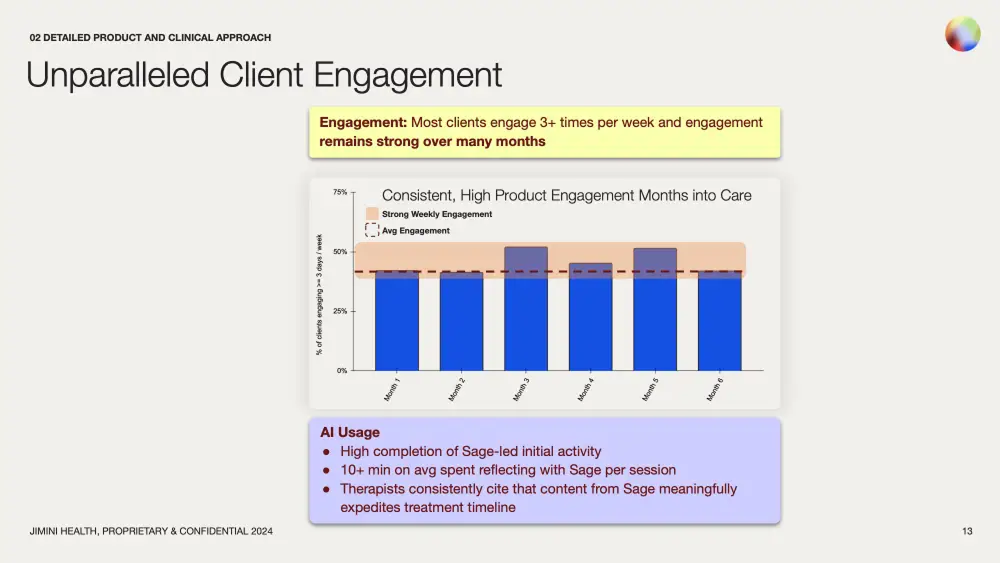
Don't show a generic pie chart splitting money between "R&D," "Hiring," and "Marketing." Tie every dollar to a specific technical milestone and the risk it eliminates. "This round gets us to pilot validation with [Partner X], reducing our core technical risk by proving [specific assumption] at commercial scale."
Deep tech fundraising differs from SaaS because the capital needs are lumpy — expensive equipment, testing cycles, manufacturing setup. Investors need to see you understand that cadence and have planned for it.
Understanding how deep tech VCs think will change how you build your deck.
Lux Capital — which just raised a $1.5 billion fund for frontier technology — invests from $100K to $100M and backs companies that are pre-product. They look for founders who can articulate both the science and the business. DCVC writes $5M–$25M checks at Series A, expecting clear value propositions with demonstrated traction. Breakthrough Energy Ventures operates on a 20-year horizon — patient capital, but only for teams that show control over every element from science to supply chain.
“An investor’s first read of a deep‑tech pitch is about the business opportunity – how big and urgent the problem is – while specialist VCs then lean on their science advisory boards to run a feasibility check on whether the underlying technology can really deliver.”
The pattern: they're evaluating whether you understand the full terrain. Not just the chemistry or the code, but the regulatory environment, the manufacturing path, and the competitive dynamics. Your story becomes fundable when it shows control, not just brilliance.
We help founders build that kind of clarity. When an AI client needed to translate complex technology into a narrative that held up under investor scrutiny, the result was a deck that communicated both depth and direction. Scientific credibility without the academic fog.
Commonwealth Fusion Systems closed an $863 million Series B2 in August 2025. What sealed it wasn't just the science — it was the execution narrative. CFS tied every dollar to concrete milestones: completing their SPARC demonstration machine, advancing a power plant in Virginia. Investors could trace a line from capital in to risk retired.
PsiQuantum raised $750 million through a blended private-government model — BlackRock alongside Australian government grants. The signal: when a government puts non-dilutive capital behind your technology, it tells private investors the science has been validated by parties with no financial incentive to oversell it.
The pattern repeats across sectors. Specific milestone-capital linkage. Proof of prior execution. And a narrative clear enough that investors could retell it without the founders in the room.
The best deep tech founders develop dual fluency — the ability to explain their technology to a non-specialist in two minutes and then go PhD-deep with a technical advisor. Your deck needs to pass the same test.
Lead with the problem, not the tech. Start every section with a relatable pain point backed by data. Your technology is the tool that resolves it — not the star of the show.
Translate specifications into outcomes. Don't say "our platform processes genomic data 40x faster using proprietary algorithms." Say "we reduce drug target identification from 18 months to 6 weeks, so pharma partners reach clinical trials a full year ahead of schedule." Same science. Completely different impact.
Show control over the full value chain. Investors want to know you've thought about how complex ideas actually reach market, not just whether they work in the lab. Address supply chain strategy for specialized components. Show regulatory pathway with evidence of agency engagement. Demonstrate manufacturing scalability with real numbers.
Maintain separate versions. An investor deck and a technical partner deck serve different audiences and different decisions. Trying to combine them is how you end up with sixty-two slides and no term sheet. A strong industry analysis helps you understand what each audience needs to see.
Build for the room you won't be in. The partners who heard your pitch will present your deal to their investment committee. Your deck needs to be clear enough that someone who's never met you can make the case for writing a check.
The deep tech funding landscape has never been more favorable. Series A rounds in deep tech pull 50% more capital than software startups with 127% higher valuations. Funds like Lux Capital and Breakthrough Energy Ventures are raising billions for frontier technology. The capital is waiting.
But capital flows toward clarity. And clarity, for deep tech, means a deck that does the translation work, from lab bench to investment thesis, without losing the scientific rigor that makes your company worth funding.
If you're building something that could reshape an industry and need a deck that matches the ambition, we're always happy to talk it through.


Aim for 15–20 slides. That's enough to cover the essential deep tech elements — technology deep dive, IP strategy, regulatory pathway, team, and commercialization timeline without overwhelming the reader. Remember that most VCs spend under four minutes on an initial deck review. Every slide needs to earn its place. If you're working with complex science, consider supplemental appendix slides for technical details that support the main narrative without cluttering it.
Treating the deck like a research paper. Founders lead with technical jargon, stack charts and data tables, and bury the business opportunity under layers of scientific methodology. Investors — even deeply technical ones — need to understand the market opportunity and business model before they care about your spectral analysis. The science supports the story. It doesn't replace it. Reviewing how strong problem-solution slides are structured can help recalibrate that balance.
Three fundamental differences. First, proof points: deep tech uses publications, patents, pilot LOIs, and grants instead of MRR and churn metrics. Second, timeline: investors expect 18–36 month R&D horizons, not quarter-over-quarter growth curves. Third, risk framing: the complexity of your technology is positioned as a competitive moat, not a liability. A SaaS deck template will actively hurt a deep tech fundraise because it forces the wrong structure onto a fundamentally different story.
Include one clear, well-designed technical diagram that shows how your technology works at a conceptual level — not at a publishable-research level. The goal is comprehension, not peer review. If investors want deeper technical validation, provide it in a separate technical appendix or data room. Your core deck needs to communicate the what and why in seconds; the how comes later. Strong visual storytelling techniques can make complex science accessible without dumbing it down.
Several major funds focus specifically on frontier and deep technology. Lux Capital (frontier tech, $1.5B fund in 2026), DCVC (computation and deep tech, $5M–$25M checks), Breakthrough Energy Ventures (climate tech, 20-year horizon), Playground Global (seed/Series A in computing, biology, infrastructure), and The Engine (MIT-backed tough tech accelerator) are among the most active. In Boston specifically, the deep tech VC ecosystem is particularly strong, with several funds co-located near major research institutions. Tailor your outreach to funds whose thesis matches your specific technology and stage.


867 BOYLSTON ST
BOSTON, MA 02116


